Gut Instinct: Packaging Matters in GI Category
The maturing gastrointestinal category may benefit from a greater focus on packaging as an important part of the brand experience and in the extension of the life of many aging brands. As more pharmaceutical brands become consumer driven, a focus on packaging is anticipated to become much more considerable.
Med Ad News’ June gastrointestinal therapeutic focus feature touches on how niche brands, prescription and OTC alike, are targeting patient subsets in the gastrointestinal category. Highlighted were two products, Salix Pharmaceuticals Ltd.’s antibiotic Xifaxan, and Procter & Gamble Co.’s OTC probiotic Align. The marketers of these two brands have emphasized the packaging aspect of each product as they target distinct positions within the market for gastrointestinal disorders.
Brand Delivers Gut Flora Story
With the packaging for Xifaxan, Concentric Healthcare Advertising realized that a doctor who believes gut flora plays a role in gastrointestinal health is going to hand the product to the customer, which will immediately place the brand into a competitive set with items on the pharmacy shelf, those advertised on television, and available at the dairy section in the grocery store. Xifaxan is indicated for the treatment of travelers’ diarrhea caused by noninvasive strains of Escherichia coli in patients at least 12 years old. On March 24, FDA granted marketing approval for Xifaxan 550 mg tablets for the reduction in risk of overt hepatic encephalopathy recurrence in patients 18 years old or older.

“When we were designing the packaging for Xifaxan, we put a lot of thought and effort into what we wanted it to communicate,” says Michael Banner, executive VP, managing partner and director of client services, Concentric. “So we actually developed what was a very patient-friendly packaging. Normally our assignment is to make it healthcare friendly, making it easy for the physician, making it easy for the pharmacist to recognize.”
Xifaxan’s packaging focuses less on the dosing and more about the benefit it conveys. The goal with Xifaxan’s packaging is to convey a message to the consumer because there are so many consumer-based brands vying for the same space. The brand identity is built around a foundation of the product’s effects in the gut and on gastrointestinal flora, but when necessary messaging can be created around the benefits it has in other indications.


“We needed to make sure that we stayed focused as a brand that controls the gut, because we know we have other indications down the road,” Mr. Banner says. “We’ve created a green, glowing, efficient light bulb that’s shaped like the human gut as a way to reinforce visually that this is working down at the gut level. Everything else from a messaging standpoint is focused on the effects it has on the brain.”
In addition, Salix asked regulators to approve its drug Xifaxan as a treatment for non-constipation irritable bowel syndrome on Tuesday, June 8. Salix is asking for an additional approval for a higher dose in this indication. The new application also includes bloating related to irritable bowel syndrome. Salix said the Food and Drug Administration will take up to 60 days to determine if the application is complete enough for a full review. FDA's review process usually takes 10 months, but Salix is asking for a priority review, which takes six months. FDA will make a determination on the request for priority review within 60 days.
Blisters Benefit Bifantis
Procter & Gamble’s Align contains Bifantis, or Bifidobacterium infantis 35624, a patented pure-strain probiotic bacteria that helps naturally balance the digestive system. Bifantis was developed by gastroenterologists. Align helps build and maintain healthy gastrointestinal flora and is the only probiotic supplement that contains Bifantis.
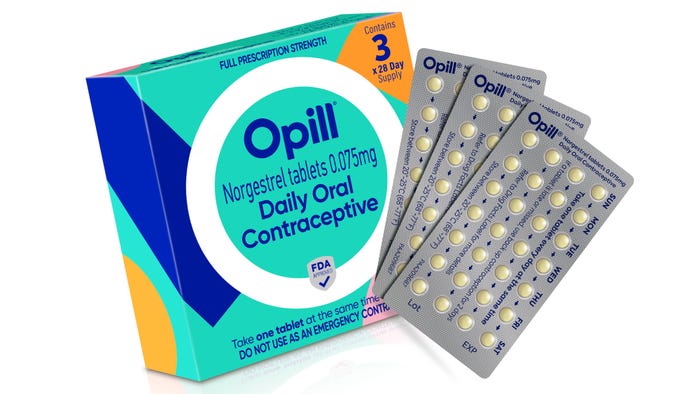
Keeping in line with the World Health Organization’s packaging recommendations, Procter & Gamble’s Align capsules are stored in specially designed blister packs that ensure bacteria remain alive and effective until consumption or the expiration date printed on the box. The company developed a Daily Digestive Tracker that comes with each Align package. This patient-friendly initiative helps guide consumers in their journey on Align and help them track how they feel each day.
Align boxes also have a “Satisfaction Guaranteed” stamp. A Procter & Gamble company representative states that the company proudly stands behind the performance of Align and believes that the patented supplement can help with occasional digestive upsets. The product offers a Money-Back Guarantee — Align will refund the price of a one-month supply if consumers are not satisfied with their experience.
Territory Wars
As companies start to dabble into the OTC space in medicine, Mr. Banner believes this is where packaging is going to matter. This has been evident with certain allergy brands, and Orlistat, which is now marketed in the United States by GlaxoSmithKline Plc. (gsk.com) as the OTC product Alli.
“A lot [of brands] go over the counter now,” Mr. Banner says. “That’s a pharma strategy. ‘How do I get more out of my brand?’ It forces pharma to then say ‘I’ve got to compete at the package level’.”
In addition, even the statins tried to obtain OTC status. Statins belong to a class of drug used to lower plasma cholesterol level. In July 2000, FDA rejected the initial bid to move Bristol-Myers Squibb Co.’s Pravachol to non-prescription status because of safety concerns.
In 2008, for the third time FDA rejected OTC statin Mevacor, marketed by Merck & Co. FDA has been reviewing a non-prescription, 20-milligram dose of Mevacor since 1999. FDA issued similar “not approvable” actions in 1999 and 2000. FDA indicated that a 20-milligram dose of Mevacor OTC, or lovastatin, would require a revised label and additional data to obtain approval. At the time, Merck indicated it would continue to push for clearance of Mevacor OTC.
Circling back to gastrointestinal brands, Mr. Banner believes it depends where one is in gastroenterology where packaging really matters. “In some conditions it’s going to be about how you stand out in the customer’s mind, which is more of that traditional package-goods mentality in developing packaging,” Mr. Banner says.
- Login or register to post comments
-
- Email this page
Printer-friendly version