Striving For Consumer Impact

OTC designs convey messages of convenience.

Over-the-counter (OTC) drug and medical device packaging confronts a variety of requirements. It has to protect the product and carry required labeling. Marketers have therefore heightened package graphics, emphasized easy-to-use packaging and product dispensing, and deployed compliance- prompting formats for the purpose of differentiating their brands within the store. 
Converters have sought to take the cost out of carton and label solutions as packagers strive to offer distinctive packaging that conforms with FDA’s growing labeling mandates.
 
Packagers have favored carton packaging for OTCs for its billboarding advantages and its ability to accommodate larger fold sizes of large-format inserts. Converters including Chesapeake Pharmaceutical and Healthcare Packaging (Hicksville, NY), Nosco (Gurnee, IL), Keller Crescent (Evansville, IN), Pharma Packaging Solutions (formerly Carton Service-Packaging Insights; Norris, TN), and Cortegra (Fairfield, NJ) are among those that offer products that combine the folded leaflet with the carton.
 
 
Dispensers and pillars for in-store merchandising are designed to support easy packout and display a distinctive presence for MWV's Med-Easy blister booklet.
Such solutions reduce SKUs and process steps in manufacturing, while keeping the literature readily accessible for the consumer. In addition, “we are seeing more demand for integrating electronic article surveillance tags into cartons. Retailers are requiring these, such as for high-value OTCs,” says Narendra Srivatsa, business development manager, Cortegra.
 
Sustainability initiatives may be another trend. Although cost and material performance have been hurdles for companies interested in converting to resource-conserving materials for OTC packaging, growing consumer awareness, not to mention Walmart’s Sustainable Packaging Scorecard, is fueling interest in sustainable choices, vendors say.
 
“The queries we are getting from customers have certainly increased. We are offering several sustainable materials with recycled content that help customers meet sustainability goals,” says Srivatsa.
“The larger opportunity is in package design, where we will assist customers in downgauging materials and minimizing package sizes,” he adds.
 
Shorewood Packaging (New York City), a business of International Paper, has launched TerraGreen, calling it the first water-based coating made from renewable resources, as the latest product in its greenchoice Environmental Solutions program.
Shorewood Packaging's TerraGreen water-based coating for paperboard is made from renewable, recyclable resources.
Applied as a gloss or matte coating on an offset litho press, TerraGreen has all the characteristics of a traditional water-based coating, including excellent migration properties and resistance to scratching, scuffing, and blocking, says Greg Chup, manager of innovation and new product development at the International Paper company.
 
“TerraGreen’s formulation is based on resins and waxes extracted from plant and tree sources. It is solvent-free and totally free of petrochemicals. Paper board packaging that uses [the coating] can be recycled when collected and processed in a municipal recycling program,” Chup says.
Developed by Shorewood strategic supplier ACTEGA Terra GmbH of Germany, the coating has been assessed as “readily biodegradable.”
It is available from Shorewood through a limited exclusive agreement for use in facilities in North America and China.
 
Aiming for the pocket
The Med-Easy package developed by MeadWestvaco (MWV; Richmond, VA) aims to appeal to patients on the go with a format and merchandising system designed for convenient pack-out and distinctive in-store presence.

A booklet-style package designed for portability and ease of use, Med-Easy launched last month in Europe and will be available for OTC and prescription applications globally, MWV says.

MWV's Med-Easy blister booklet is designed for patients on the go.

 
To open the booklet, the patient tears a tamper-evident perforated tab. Leaflets and blisters are held in vacuum forms that keep the components with the package. When accessing the medication from the blister on one panel, patients can use one hand to click the blister out of the pocket and dispense the pill.

For OTC product merchandising, trays and pillars are supplied for supporting in-store branding programs.
“With Med-Easy, we have developed a complete solution that considers how the packaging will work in the supply chain and in the stores. We can get more product on a pallet and more on the shelf,” says David Spackman, director of healthcare packaging (Europe), MWV.
“The unique design supports easy pack out, minimizes tertiary packaging, and creates a strong retail presence,” Spackman adds.
The format is designed to run on standard cartoning machines with minimal modifications.
MWV conducted research with patients in London, Paris, and Munich to derive a packaging format that could meet their needs and the limited child-resistance requirements of Europe. MWV is developing a CR-focused version for the U.S. market, Spackman says. 
Most of the patients surveyed by MWV were on multiple maintenance medications and thus familiar with current designs. When using conventional blister packages, patients often take the blister out and throw away the carton and leaflet with branding and educational information. “They felt that folding cartons do not add much value and tend to squash out of shape through extended use,” Spackman says.
 
“A number of themes emerged time after time. Consumers want a package that protects the product, but that is convenient, portable, and easy to use. They wanted something that would keep the blister and leaflets together, so they could keep the information on hand,” he says.
Additionally, patients sought a package that could be used discretely and that presents a non-medical appearance.
 “People want something that does not look over-packaged, and [yet] that will be resistant to damage in a pocket book or bag during everyday use.”
 
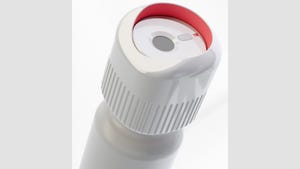
World Wide Packaging (Florham Park, NJ) offers CR caps for plastic tubes in sizes 13mm to 60mm that are removed with a combination of downward force and twisting.
“We cut the corners a bit like the iPod design, so the package won’t catch on a man’s shirt or jacket pockets,” Spackman explains. “Med-Easy looks great throughout its use, a feature that is also important from branding perspective. We are providing a simple design that patients are more likely to take with them and more likely to use.”
 
Child protection

Ampac Debuts Front-Panel Zippered Pouch


Ampac Flexibles has launched a reclosable, stand-up pouch that situates the zipper on the pouch’s front panel. In the Easy Zip Pouch, the user pulls a tab to access the zipper located below the header.

Packagers do not have to fill through a zipper and users don’t have to struggle with getting to the zipper through the top of the package. Also, waste from a discarded header is eliminated.

“The Easy Zip Pouch provides a tamper evident design with a clean opening tab that allows easy access to the product. The top isn’t torn off so you don’t get the shredding of the header that sometimes occurs in conventional pouches. You are left with a clean package, and the header remains in place for extra space for copy, says Sal Pellingra, innovation and marketing director.

“We can produce the tab in different sizes for easier opening by gloved operating room personnel, and for the elderly,” he adds.


Ampac Flexibles (Cincinnati) has expanded a platform of barrier overwrap films that can be customized to meet barrier and child-safety requirements. Developed primarily for OTC applications, the Flexi-Free CR (child resistant) laminations feature tear and puncture properties for child resistance while maintaining ease-of opening by seniors.
The first commercial application for Flexi-Free film was an overwrap for a plastic vial-based delivery system for an OTC allergy medication. Ampac has since expanded the line to include five laminated barrier structures, says Doug Andersen, market development manager, medical, pharmaceutical, Ampac Flexibles.
 
The films are suitable for single-dose medicines and vial packaging, and other packaged pharmaceutical products as well as consumer products requiring barrier and child resistance, Andersen says.
Flexi-Free CR laminates provide toughness along with tear- and puncture-resistant properties that can be tailored for varying degrees of child resistance. The standard structure is either a foil, a metallized film, or a clear film barrier layer sandwiched between PE and a sealant layer.
 
“We can customize off our laminate film platform with different structures to provide variable thickness, stiffness, and toughness. The sealant film layer can be configured in up to seven layers for addressing puncture and tear resistance and seal-strength requirements,” Andersen says.
 
The expanded range of films and custom capability cater to the market’s need for different levels of child resistance, depending on the formulation and strength of the drug being packaged and tested to Consumer Product Safety Commission protocols.
“Flexi-Free films are coupled with our ten-color, high-quality flexo printing for creating packaging with high consumer impact,” Andersen adds.
 
The films can be produced using Ampac’s solventless lamination (SLL) technology that reduces energy use and volatile chemicals. A third-party energy audit has certified an 86% energy improvement over solvent-based laminations using the SLL, says Sal Pellingra, innovation and marketing director, Ampac.
 
“With this third-party verification, customers can receive extra credit for a sustainable energy improvement in the Walmart score card,” Pellingra says.
In another film barrier product, Ampac is testing a film lamination with a barrier inner layer that restricts or prevents package extractables from migrating into the consumer product.
The applications targets OTCs, prescription drugs, or any product where there is a concern of the package imparting extractables to the product being packaged, says Pellingra.
 
“We produce packaging for forensics such as for evidence accumulated in arson investigations where you can’t have any leaching that would contaminate the packaged substance. It makes sense to apply this to the pharmaceutical space where you have to ensure you have a clean inner layer,” Pellingra says.
“Unique structures with adhesives and package printing solutions are among the issues creating an increased focus by our customers on package extractables,” he concludes.
 
 
No votes yet