Protecting IVDs from Moisture and Oxygen

IVD packaging should provide good barrier protection to ensure product accuracy.

Erik Swain, Senior Editor

Desiccants from Süd-Chemie are used in IVDs to help prevent inaccurate test results.
In vitro diagnostic tests (IVDs) are becoming more diverse. Today, the market sports everything from simple over-the-counter pregnancy tests to complex nucleic acid–based tests found only in the most sophisticated medical laboratories. They come in all sizes, shapes, and formats and often contain liquids such as diluents or reagents.

A recent study by Business Communications Company, Inc. (BCC; Norwalk, CT), illustrates some of this diversity. The study found that the market share for medical diagnostic kits (MDKs) declined from 35.7% in 2000 to 34.6% in 2001, and projects a further drop to 30.8% in 2006. Part of this trend can be attributed to the rise of point-of-care (POC) instruments, which are inexpensive automated devices whose portability makes for greater ease of use. Even with the loss in market share, however, BCC expects MDKs to grow 6.2% per year to reach $5.2 billion in 2006, an indicator that there is great need for packaging for these types of products.

None of this growth would be possible, however, if the effectiveness of the devices were compromised because of moisture or oxygen ingress.

"The chemistries on 96-well microtiter plates are extremely hygroscopic," says Jack Cunneen, vice president of sales, LPS Industries (Moonachie, NJ). "If they take on moisture, that can skew the results of the test. So barrier protection is critical."

Some of the potential detrimental effects were described in an article by Stefan Dick and Jean Thomas Woynicki of Süd-Chemie Performance Packaging (Belen, NM) in the June 2002 issue of IVD Technology magazine, a sister publication to PMP News. As such, it is tremendously important that IVD manufacturers choose their packaging carefully.

DESICCANTS

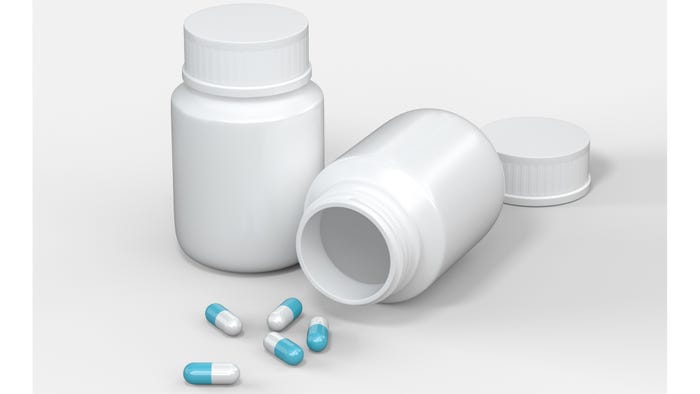
One way to protect the test from moisture, oxygen, or other substances that can harm its ability to function is by using desiccants.

"In the diagnostic industry, desiccants are primarily used to keep chemicals and enzymes dry so there are no false positives. Most are very moisture-sensitive," says Robert Crossno, national sales manager for Süd-Chemie. "They are used for the same primary purpose as in drug applications, to extend shelf life on the product and to ensure accurate performance. In diagnostics, you see more desiccant applications with packets and tablets. Test strips might be packaged in a tube with a desiccant in a cap, or you might see the desiccant in the kit itself."

William J. Calvo, PhD, principal scientist—research and development for Multisorb Technologies, Inc. (Buffalo, NY), says desiccants are used to "control the environment as well as spill-age" within an IVD kit, but a growing trend is to provide a sorbent with "multiple functionalities."

"We are working on the ability to absorb organics, not just water, as well as neutralize volatile acids," he says. "We also have the technology to tablet the actual sorbent material."

Innovations in the manufacturing of desiccants are also emerging, Crossno says. "Some customers have asked us to incorporate a desiccant into the polymers of the kit, or to make the packets flatter because of space constraints. The kits are getting smaller, so the size of the desiccant also has to get smaller."

Another, he says, is "using clay, the natural desiccant, in applications with lower relative humidities, where it performs better than silica gel."

Calvo notes that molecular sieve technology is growing more popular in such applications. "Clay may be slightly better than silica gel in terms of performance. However, at lower relative humidities, the ideal desiccant would be molecular sieve," he says. "Clay would begin to desorb moisture readily back into the container as temperatures rise. Molecular sieve would not. This may be a factor to consider when storing or shipping products with clay in higher-temperature environments."

 
2001
2006
% AAGR
2001-2006
Clinical laboratory testing
Includes infectious disease, drug, hormone,
cancer and blood/urine chemistry testing.
1560.0
1808.5
3.0
Home-use
1120.8
1646.8
8.0
Research
830.5
1368.2
10.5
Veterinary testing
296.0
327.0
2.0
Total
3807.3
5150.5
6.2
Source: Business Communications Company, Inc.
U.S. medical diagnostic kit applications market at U.S. manufacturers' sales levels, through 2006 ($millions).

Marcus Dukes, technical director of Desiccare Inc. (Pomona, CA), agrees that molecular sieve desiccants are becoming more popular in some IVD applications. "Many of the products in the diagnostics sector require less than 5% RH to stay healthy," he says. "The best way to achieve this is applying the right amount of molecular sieve. Molecular sieve, unlike silica gel and clay, is very active, even at the lowest humidity, and can even reduce the atmosphere to less than 1%RH."

Conversely, sometimes tests need moisture added to them, and the desiccant manufacturers can provide solutions there as well.

"The humectant, which is the exact opposite of a desiccant, is a useful technology," Calvo says. "It contributes moisture continuously throughout the life of the product. This may be used in applications where you need to keep the relative humidity at a set level, or where you keep moisture within the product."

OUTER MATERIALS

Pouches, trays, tubes, and overwraps can also be employed to keep moisture and oxygen out and any liquid products inside stable.

"The market is shifting every day, but the pouch, because of the way it was originally designed, still seems to be an acceptable packaging mode, regardless of the chemistry in the medical diagnostic kits," says LPS Industries' Cunneen. "The main criteria are extremely low moisture-vapor transmission rates and oxygen transmission rates. A lot of packages are vacuumed, and if you do not have a good oxygen barrier, you will lose the vacuum over time."

These packages often must be versatile as well as protective. LPS, for example, provides foil barrier pouches with reclosable zippers for 96-well microtiter plates. Their long-term stability when heat-sealed is around two years, but because of the zippers they also offer short-term stability, Cunneen says.

"When it is time to use the plate, in a lot of instances they will not use all the strips at once. Hence the pouch needs to be reclosed to store the remaining strips until the next use, which could be as long as one or two weeks," he says. "The zipper is not hermetic, but it helps protect the integrity of the chemistry of the plate that's being used up."

Likewise, it is important for the user to know when the kit has been tampered with or has had its integrity breached. There are tamper-evident materials available, such as XT polymer 375TE compound from Cyro Industries (Rockaway, NJ), which is a special formulation used in the manufacture of medical trays. "If the package is punctured or cracked in any way, it leaves a white blush," says Steve Magaziner, Cyro's marketing manager. "It is easy to inspect the package to see where or how it might have been compromised. In a form-fill-seal or other packaging-line operation, it is easy for the operators to see that the seal is intact. If there is a puncture, it draws your eye right to the area of the impact of the puncture. With most packaging, if there is a breach, it is not obvious."
LIQUID PACKAGING

Barrier and stability considerations also come into play for the packaging of liquids inside the kits, such as diluents, controlled solutions, buffer solutions, and reagents.

"Stability and interaction are issues that arise early," says Steve Dilts, director of marketing for Unicep Packaging Inc. (Sandpoint, ID), which makes unit-of-use tubes for liquids in IVD kits. "We have a PE resin that seems to tolerate and work well with most solutions we've been asked to package. So far, we have not run into a case where our HDPE/LDPE blend would not work for the customer. Generally we leave it to the customer to determine if shelf-life requirements will be met in terms of vapor barrier."


In these applications, filling and dispensing accuracy is critical.

"Because many of the IVD solutions we fill are measured out in microliters, frequent items of concern are repeatability of drop size and total dispensed volume," Dilts says. "Fill tolerances are critical. We offer our customers a trial run process to determine the appropriate fill level required to produce a specified dispensed volume. Also, we've incorporated high-precision pumps just to meet the safety needs of this market. It's forced us to tighten up our specifications and tolerances in our filling capabilities."

CONCLUSION

The IVD market is hardly a one-size-fits-all proposition, but packaging solutions that can provide barrier protection and stability have been shown to have a range of applications across the IVD spectrum. IVD manufacturers who fail to address these issues through packaging could be hampering the accuracy of their products.

No votes yet