High-End Designs Protect Brand Equity

Quality and technology matter in protecting the integrity of pharmaceutical brands.

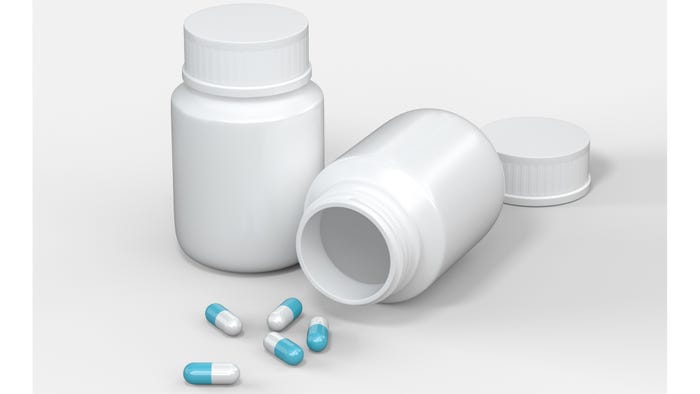
Innovative bottles and closures, based on proprietary designs and technologies, add value to pharmaceutical brands. New design trends are on the rise, such as senior-friendly packaging and smart packaging, while environmentally friendly initiatives keep products lightweight and contaminant free. Although crucial packaging decisions continue to be based heavily on the safety needs of patients and patient compliance, conservative regulatory and economic environments have presented some hurdles in the adoption and application of high-end trends.

Packaging experts agree that the value of high-end packaging solutions is enormous when examining the overall picture. By focusing on quality products, pharmaceutical marketers are going to have fewer rejects at the end of their line and fewer field complaints. Higher-end containers and closures can minimize drug recalls and protect brand equity.
“It really depends on the philosophy of the company itself, but certainly the ones that I’d say are the real industry leaders look at it from the bigger picture standpoint,” says Fran DeGrazio, vice president, marketing and strategic business development, West Pharmaceutical Services (Lionville, PA).

Some industry experts say there are still barriers to the adoption of innovation. Many pharmaceutical companies may not be looking for major changes right now, or even minor changes. The economic slowdown and FDA’s conservatism are all contributing factors.

“Bottom line is that what is needed to allow for a better regulatory environment is more certainty in the future of what the U.S. market will be,” says Jad Darsey, strategic markets sales manager,
TricorBraun (St. Louis, MO).

SMART PACKAGING AND COMPLIANCE

Smart packaging, which typically makes ues of radio frequency identification (RFID), is a high-end option for pharmaceutical marketers who are interested in solutions for traceability, inventory control, lot control, recall management, or supply-chain control.
Rexam Plc. (London) has developed fully integrated RFID-enabled plastic pharmaceutical bottles that allow compliance with FDA recommendations. The tags, in either high-frequency or ultrahigh-frequency versions, are integrated into containers combining fully traceable lifecycle and counterfeiting prevention.

“Our RFID embedded-chip technology was initially developed and driven by legislation that was due to be in effect in California in 2009,” says Tom Ryder, director of marketing and product management, Rexam Primary and Rx Packaging. “The legislation was introduced to require pharmaceutical manufacturers to have track-and-trace capability known as electronic pedigree. This legislation has since been pushed out [to 2015–2016]. However, the embedded-chip technology can be used for many applications, such as traceability, anticounterfeiting, and supply or cold chain management.”


Companies in the industry who repackage drugs for use in the United States Department of Veterans Affairs hospitals are also looking at this technology from a value-added or traceability perspective.

Other areas of development include user-friendly bottle-and-closure systems that target the elderly population as well as patients with arthritis. Rexam is investigating the use of material moldings, such as grip-type resin or soft-touch resin on the closure, for such patients. In addition, the company is focusing on controlled dispensing designs.

Rexam offers various technology for dosage control. One such product is Dispense-a-Seal, which features a foil liner that acts as a dispensing fitment on the top of the bottle.

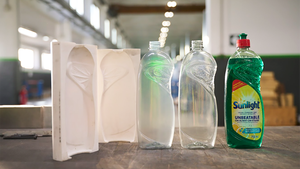
In the area of consumer-friendly products, Rexam has introduced a new package called ScriptCheck. Featuring a D-shaped footprint, the bottle offers an ergonomic design initially created to address compliance in the prescription product market.

“Consumer insight research verified that consumers prefer this D-shaped design compared with that of traditional round shapes because it’s easier to use, to open, and to hold in the hand,” Ryder says. In addition, “it has more stable storing characteristics, and the label area is four times greater in size than that of a normal label, therefore there is more printing space for increased prescription content and information, which is key to patient compliance.”

Pharmacy-connected GlowCaps, developed by Vitality Inc. (Cambridge, MA), also serve to address patient adherence to medications. GlowCaps fit popular prescription bottles available at retail pharmacies and are embedded with a wireless chip that helps people with their prescription regimen through reminders, social feedback, financial incentives, and automatic refills.

QUALITY IN PROTECTIVE PACKAGING

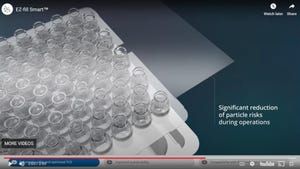
Protection against contamination is an area of major concern among pharmaceutical marketers. One trend favors closure systems that are designed to feature extremely low particulates without any kind of exogenous contamination.

“I would say that would be an area that would be the most significant trend across the board in relationship to injectable products,” DeGrazio says. “There are multiple ways of improving a product’s quality around closures.”

A major trend in the industry is the purchase of closures that have already undergone pharmaceutical-grade washing and are provided in ready-to-use sterilized formats from the supplier. In addition, tools like vision inspection are being used as a way to minimize particulates that may be on closures.

West Pharmaceutical Services offers Westar Ready-to-Sterilize and Westar Ready-to-use product. These products help to remove and minimize particulates that may be on closure surfaces. West also has a product called Envision, a vision-inspected closure system.

In addition to sterile closures, West offers a fluoroelastomer film called Flurotec that adheres to the closure. The film creates a barrier between the closure, which is made of a rubber elastomer, and the drug product to minimize the potential interaction that could occur between the drug and the closure.

“That is a critical part of how the actual closure system is designed because you would be designing it so that you still get what is called seal integrity or container-closure integrity, but you also have this film covering the contact area with the drug product,” DeGrazio explains.

From a therapeutic category standpoint, companies with injectable products in the areas of oncology, vaccines, multiple sclerosis, rheumatoid arthritis, diabetes, and autoimmune diseases have expressed interest in Flurotec.

Focusing on protection and delivery, Darsey explains that the two ways to protect and deliver a solid oral-dose product—a standard HDPE packer with a child-resistant closure and a blister card or pack—aren’t seeing a lot of ground-breaking innovation. However, “there are some recent innovations that we are bringing to the market,” he says.

In 2009, TricorBraun received regulatory approval for the desiccant polymer DryKeep. DryKeep absorbs 100% of its weight in water, providing three times more absorptive capacity than do other in-wall and loose desiccant systems, which aids in controlling protective packaging costs, says Darsey.

DryKeep’s moisture uptake is controllable, allowing for specific internal humidity to be targeted and maintained for the entire life of the product. This absorptive control means containers do not require any more care than traditional bottles in the filling process to ensure that moisture capacity is intact. DryKeep can be molded into any polymer and used in any plastic process, and the bottles are available in multilayer extrusion blow molding and monolayer injection blow molding formats in any size.

LEANER AND GREENER

Environmentally friendly initiatives have recently involved the use of post-consumer regrind, lightweighting, and the use of plastic that can be incinerated with minimal ash.

Rexam uses material that is made with postconsumer regrind, or postconsumer resin that has come through the recycling chain. This requires FDA approval to use in a manner towards healthcare products.

“We have a proprietary and exclusive arrangement with a resin company to provide packages with 100% PET post-consumer recycled material,” Ryder says. “We have commercialized this material in our PET drug oval prescription product line, which is called the Green Oval. It is the only drug oval made with 100% postconsumer resin.”

Rexam has also addressed customers’ interest in taking plastic weight out of their package and is looking to bring out a full line of bottles that are lightweight compared with the standard products in the marketplace. This line of bottles would prevent the need for drug companies to readminister the entire stability process, which is timely and costly.

“From the beginning of the drug development and stability phase, these customers can put their products in the lightweight containers,” Ryder explains.

West Pharmaceutical Services has implemented green initiatives through its Japanese partner Daikyo. This company has several products on the container and closure side, including a product called Crystal Zenith. Crystal Zenith is a cyclic olefin polymer (COC) that is a plastic that can be incinerated with minimal ash.

In addition, while the majority of containers for injectable products have been glass, there is a growing trend toward plastic materials. The trend in the industry seems to be that pharmaceutical customers are evaluating these COC-type materials in vial and container formats and also syringe-system formats. One of the key drivers in using materials like Crystal Zenith as a container is design flexibility.

“If you’re using a plastic material like Daikyo CZ, you can certainly produce many different shapes and configurations and have flexibility in a container that may be used in an injection device,” DeGrazio says. “You don’t have that flexibility with glass.”

While sustainable options exist, Darsey explains that companies are not heavily looking into green initiatives. He says that pharmaceutical companies are not willing to take any leaps of faith in the existing regulatory environment.

“If you couple that with packaging not being essential to selling a product, there is not a lot to tell,” Darsey says. “Companies are looking for the same look across a brand and maybe looking for something novel in the closure system or something that makes filling easier or cost savings, but none of this is new. It has been going on for decades.”


No votes yet