Complementing the Fill


Pure Safety

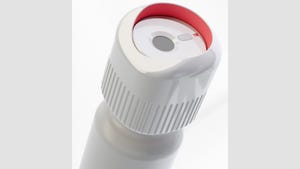
Seal Safe self-sealing closing adapters courtesy of Andwin Scientific.

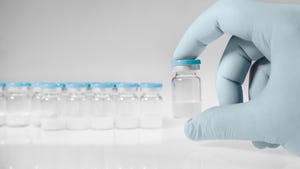
Andwin Scientific (Woodland Hills, CA) doesn’t “fill” anything. But the technology developed by the company goes hand in hand with the latest in filling technology with the goals of achieving a totally pure and safe end product.

Per Dr. Abner Levy, company president, airborne particulate contamination is a big issue. Since it would be cost-prohibitive to fill every single type of pharmaceutical product in a sterile cleanroom, his company has developed the next-best alternative: a self-sealing cap. Two devices enter through the cap. One evacuates air and allows a clean fill, and the other is the dispensing tip. The cap seals itself immediately upon withdrawal of the devices. The result is a perfectly pure product, Levy claims. No air is left behind, no contamination, no waste, no splashing.


“The benefit financially to the manufacturer is up to a 75% reduction in direct cost. Instead of three steps to evacuate and fill a container, there is only one step. In addition, the end result is a safer product,” he says.

Careful Cartoning

The Romaco Group in Karlsruhe, Germany, is one of the world’s leading suppliers of machines and installations for process engineering and packaging. Egbert Heid, group marketing manager, says that the company was recently called upon to solve a need for very flexible cartoning tailored to a delicate, filled product for Farmigea S.p.A., one of the major players in the Italian pharmaceutical ophthalmology industry.

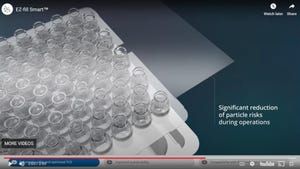
Farmigea needed a cartoning system specifically tailored to the plastic or glass vials it uses for ophthalmic product packages when introducing a new series of sterile eye drops. Romaco’s P91 S packaging system was chosen for this task. “One of the great benefits is that the change in format can be carried out directly by the operator responsible for the general operation of the machine,” Heid says.


No votes yet