Verdicts & Settlements January 17, 2012: Jury awards $104 million to couple for hepatitis infection

[Lawyers USA]

Published Date: January 17, 2012 12:01:00 AM EST
Author: Sylvia Hsieh; Sylvia Hsieh


In the third trial over a rash of hepatitis C infections caused by contaminated vials of the anesthetic propofol at Las Vegas colonoscopy and endoscopy clinics in October, a jury ordered the drug makers to pay $104 million to 71-year-old Michael Washington and his wife Josephine.

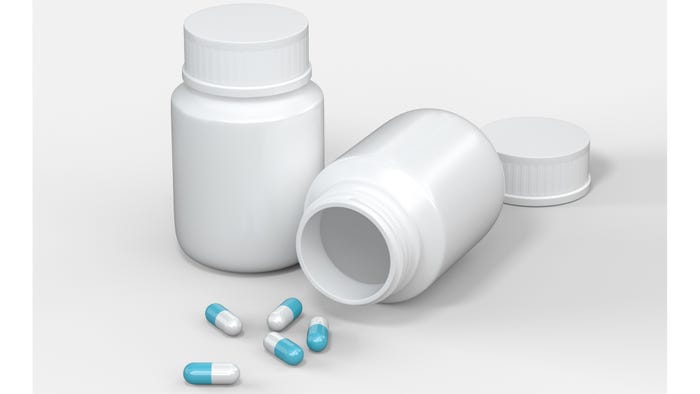
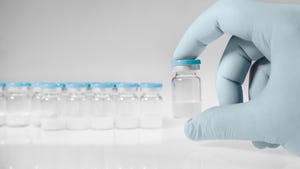
Lead plaintiffs' attorney Richard H. Friedman argued that Teva Pharmaceuticals, which makes the drug, and Baxter Healthcare Corp., which marketed it, knew that the jumbo 50 ml and 100 ml vials of propofol were at risk of being reused for multiple patients in shorter surgeries instead of smaller, single-dose prefilled 10 ml syringes.

A key to the win, Friedman said, was impeaching the defense's star witness on causation with a surprise piece of evidence that a lawyer on the plaintiffs' team discovered while playing around on his iPad while observing the trial one day - an article one of the defense experts had written entirely contradicting his testimony.

"In 32 years, I've never had such an unbelievable impeachment. It was one of the big highlights of the trial because causation was sharply contested," said Friedman, who practices at the eight- lawyer firm Friedman Rubin in Seattle.

Plaintiffs have won three consecutive nine-figure verdicts in these cases.
Two days before the $104 million verdict, another jury in the same Las Vegas courthouse awarded $182.5 million to three patients infected in the same outbreak, and in April 2010, a jury awarded $505 million in the first trial.

Unlike the other trials, the latest was the first time the plaintiffs won on a defective design claim.

"[The defective design claim] holds the drug companies accountable for selling the 50 ml vials in clinics. It has a huge impact with punitive damages and it's going to have an impact on marketing," said Patti S. Wise, an attorney at Edward M. Bernstein & Associates in Las Vegas, who also represented the plaintiffs.


"We had two claims: a negligence claim that it was negligent to come out with the product and not try to modify it and to sell it to endoscopy centers, and a defective design claim that nobody needs a 50 ml vial. We won on both claims," said Friedman.

Defense attorneys Jennifer Levy and Glen S. Kerner did not return calls seeking comment.

First 'genetically linked' case

Washington was one of the first people to report a hepatitis C infection from what was later discovered to be cluster of a few hundred patients. There were two similar outbreaks in Miami and Washington, D.C.

This was the first case to go to trial involving a patient who was genetically linked to the source of the virus.

"There was no doubt his infection was linked to the source patient. The [Centers for Disease Control and Prevention] investigators were able to track back to the person who came into the clinic with the virus. They drew all the blood [of everyone reporting infection] and showed they were all genetically linked," said Wise.

However, the plaintiffs' team still had to show the infection was spread because of multi-dosing from the large vials of propofol against defense claims that hepatitis was spread by dirty endoscopes, poor cleaning practices and reuse of other equipment.

But Wise said their client did not share the same endoscope number as the patient who was the source of the virus.

The lead investigator and chief epidemiologist for the state also testified that he had ruled out dirty scopes as the source of the infection.

Then, a young 20-something GI tech who worked at the clinic got on the stand and recanted his deposition testimony about not properly cleaning the endoscopes.

The defense had seen the same witnesses' testimony in the trial that took place in the same courthouse a few days earlier.

"Both witnesses had gone badly for them the week before, but they called them anyway," said Friedman.

And that was just the first week.

"It felt like a criminal case where the defendants don't have much to work with, so they throw up as much dust and smoke as they can. That's what it started to feel like," said Friedman.

The last witness the defense called in the month-long trial only drove home the plaintiffs' case.

According to Friedman, the defense called gastroenterologist Dr. Jonathan Cohen to wrap up their case and opine that the outbreak was caused by dirty scopes, not double- and triple-dipping into vials of anesthesia.

"They called him as their last witness. He had perfect credentials, was a good talker and looked like the boy next door. This was the guy that was going to bring it all home for them," said Friedman.

But a few days earlier, another lawyer on the plaintiffs' team had found an article online that Cohen authored contradicting everything he was about to say on the stand.

The expert testified that the clinic had dirty scopes, but his article said that up to 40 percent of endoscopy centers don't clean their scopes. The expert testified that the infection was not caused by misusing propofol vials, but his article said the Nevada outbreak was caused by multidosing of propofol. The expert denied he wrote the article, but the article was on his curriculum vitae.

"I've never seen an impeachment as black and white where the witness says X and he's published Y," said Reno, Nev., lawyer Matthew Sharp, the iPad-surfing attorney who discovered the article.

Largest loss of consortium damages

Of the three cases tried so far, this was the highest loss of consortium damages awarded to a spouse.

According to Friedman, his clients were model plaintiffs who lived exemplary lives.

"They are both African American from a very poor background. He was a retired Air Force sergeant. His wife was a nurse. They worked all their lives, raised kids, got educated and were looking forward to a very nice retirement and instead this is what happened," said Friedman.

Unlike most of the other plaintiffs thus far, because of his age and other ailments like diabetes it's too risky for doctors to treat Washington's hepatitis, so he is forced to live with it.

Josephine, a nurse, testified about how her role has changed from partner to caregiver and the impact on their lives, public and private.

Aside from the neurological effects of the virus on Michael, like having no recollection of going out to dinner last week, Josephine also testified that even though doctors say there's only a small chance that she can get hepatitis from having sex with her husband of 31 years, "sex is largely mental and in my head I've got this fear now whenever we're intimate."

"This was a dramatic moment. There were jurors with tears in their eyes," said Friedman.

The required six of eight jurors returned a verdict of $7 million for Michael and $7 million for Josephine, exceeding the $5 million each that Friedman requested.

The jury also awarded $90 million in punitive damages ($60 million against Teva and $30 million against Baxter).

In 2009, the defendants rejected the plaintiffs' offer to settle for $1.5 million against Teva and $1 million against Baxter, according to Wise.

The verdict total in these cases has hit $791 million, and three more trials are on deck in January and February.

At-a-glanceVerdict: $14 million in compensatory damages and $90 million in punitive damages.State: NevadaType of case: Product liabilityStatus: The plaintiffs' attorney fee request of $7 million was granted, and the defendants' post-trial motions for a renewed directed verdict and a new trial are pending.Case name: Washington v. Teva PharmaceuticalsDate: Oct. 12, 2011Plaintiffs' attorneys: Richard H. Friedman and William S. Cummings of Friedman Rubin in Seattle; Patti S. Wise of Edward M. Bernstein and Associates in Las Vegas; Matthew L. Sharp of Matthew L. Sharp in Reno, Nev. Defense attorney: Jennifer Levy of Kirkland Ellis in Washington, D.C.; Glen S. Kerner of Goodwin Procter in New York.

(c) 2012 ProQuest Information and Learning Company; All Rights Reserved.