Machine Vision Veteran Looks Back at Packaging’s First Embrace of Data
Twenty five years ago, packaging was almost like a “black hole,” notes Robert DeJean, president and CEO of Systech International (Cranbury, NJ). “Everything was mechanical or manual, so there was not a lot of visibility along a packaging line or any data generated. There wasn’t much control, either, and automation was just reaching the packaging line.” DeJean shared these observations as he reminisced about the pharmaceutical packaging industry to PMP News editor Daphne Allen as Systech celebrated its 25th anniversary at Pack Expo International.
“We’ve really only seen automation widely used in packaging in the last 15 years,” he said, noting the advent of PLCs, SCADA systems, and other automatic means of quality control.
![]() |
| Robert DeJean, president and CEO of Systech International, celebrated Systech’s 25th anniversary at Pack Expo International. |
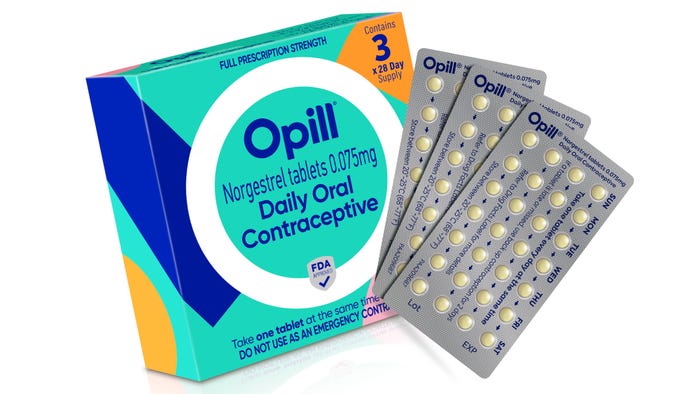
For instance, one of the lines DeJean recalled from the early days was a line packaging birth control tablets. Compacts were inspected by two women, who had to perform about 30 inspections. “I was amazed at what they could do, but no way did they catch everything,” he said.
So DeJean set out 25 years ago to bring some visibility to the packaging line, starting with the pharmaceutical industry. “We honed in on pharma because of its need for critical quality inspections,” DeJean said. Initial work entailed building machine vision systems for inspecting vial crimps, syringe assembly, date and lot stamps, and tablet placement in blisters along with verifying labeling. “We wanted to get as close to 100% inspection as possible.”
Much of the technology available at the time was not built for packaging, so Systech built its own solution called Sentri in the late ‘80s. It could handle package inspections for presence, shape, defect, color, and count along with label inspections involving optical character verification (OCV), optical character recognition (OCR), bar code verification (BCV) and print quality verification (PQV). Systech then introduced its TIPS Advisor line-control system in the ‘90s. These technologies, along with Guardian which would come later, formed the basis for Systech’s Packaging Execution Systems (PES) solution.
Systech was met with some resistance, however. “Despite a big push toward quality, companies were worried automated technology would affect head count,” noted DeJean.
In 1993, however, FDA began its push toward 100% inspection of cut labels, so pharma warmed up to automatic inspection. “They found it faster and easier,” he said. Manual inspection couldn’t keep up with that mandate.

Some of Systech’s earliest jobs involved managing inventory at multiple sites. “We’d identify and sort items and update records for inventory reclamation. One customer that previously performed these steps manually found millions of dollars of product,” said DeJean.
But DeJean realized that projects like these weren’t just about inspection. “It is what you learn from inspection data,” says DeJean. “We always looked at doing more than inspection and immediately saw the importance of data handling.”
Getting industry to share that realization has been somewhat of a slow road. “Most companies weren’t ready to deal with data back then, and some still aren’t today. Bi-directional communication of data in particular hasn’t been in place in packaging,” he said.
![]() |
| PMP News Editor Daphne Allen spoke to Robert DeJean, president and CEO of Systech International, at Pack Expo International 2010 on how the pharmaceutical packaging industry has evolved in the last 25 years. |
With item-level serialization mandates on the horizon, this will have to change. “Companies will have to be able to identify the uniqueness of products. Operating in a PES environment allows companies to do so along with managing product processes, ensuring right product/package, and having all data travel with each product,” said DeJean.
Once this infrastructure is in place, companies can then develop “personalities” for their products, which according to DeJean consists of product characteristics and context, raw materials, product source and destination, and eventually patient-specific data. Coupling this information with bidirectional data communication, companies could even track patient compliance.
Such capabilities will be crucial for meeting the challenges of the next 25 years, predicted DeJean. “Companies will need to think beyond mandates. They should be looking at ways to add value, such as through patient safety initiatives,” he said.
Of course, companies will need flexible solutions to meet numerous mandates. “There are many rules and many product variations, so companies have got to be able to support variability. They also have to scale and support global operations.” If companies think solely about local operations, they will have to update systems a lot, he adds.
Systech boasts such flexibility and scalability with its Serialized Product Tracking (SPT) suite, and it is enhancing its configurability with a new graphical user interface (GUI) scheduled to be available in the first quarter of 2011. “The drag-and-drop tools are written in packaging logic, not computer logic. We provide an iconic view of all machinery on lines, such as labelers, bundlers, case packers, and palletizers. Users can wrap all those applications into a composite that can be duplicated elsewhere as needed,” DeJean explains. “It cuts the learning process and puts as much power into the operator as needed.”
Packaging has come a long way in 25 years, observed DeJean. “We are seeing packaging professionals involved in strategy meetings along with IT and supply-chain professionals. And companies are embracing the PES philosophy beyond item serialization, employing serial numbers for returns management, channel management, diversion control, and focused recall optimization in which a small subset of a lot is recalled instead of the entire lot.”
“And there is much more to serialization that just label inspection,” added DeJean. “It requires infrastructure change. Perhaps that is why industry is so slow. But things are starting to come together. Today, companies are adapting to serializing bottles as the units. Tomorrow, it will be the tablet.”
Such visibility shows that packaging lines no longer operate in a black hole.
- Login or register to post comments
-
- Email this page
Printer-friendly version