Imminent Labeling Changes for Injections

USP is proposing a revision to General Chapter <1> regarding injections labeling of ferrules and cap overseals. The revision would limit printing on ferrules and caps to only those cautionary statements related to imminent threats of life-threatening situations. The proposal will appear in the January/February 2010 Pharmacopeial Forum; a preview of the revision can be found on USP’s Web site.

USP had originally proposed a similar revision years ago, with an effective date of October 1, 2005. But the issue remained under discussion in committees, reports Shawn Becker, USP’s director of healthcare quality standards. Comments received from industry and FDA were considered by the USP Expert Committees. This recent proposal is not much different from the original one, she says. “It offers a lot more clarity and intent, explaining that cautionary statements may only be related to threats of imminent danger. It explains clearly what may and may not appear on the ferrule and cap overseal.”


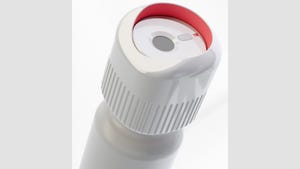
For instance, the revision states that “Only cautionary statements may appear on the top (circle) surface of the ferrule and/or cap overseal of a vial containing an injectable product. A cautionary statement is one intended to prevent an imminent life-threatening situation and may include instructional statements that provide potency or other safety-related instructions if warranted.” Further, “if no cautionary statement is necessary, the top surface of the vial, including the ferrule and cap overseal, must remain blank.”
Any other elements must appear elsewhere. “Other statements or features including but not limited to identifying numbers or letters, such as code numbers, lot numbers, company names, logos, or product names, etc., must appear on the side (skirt) surface of the ferrule on vials containing injectable products but not on the top circle surface of the ferrule or cap overseal.” Their presence on the side should not detract from the cautionary statements printed on the top surface.

Becker urges respondents to read the standard carefully and to provide data to back up all comments. “The National Coordinating Council, which consists of such groups as the AMA, The Joint Commission, ANA, and others, is backing up this change. Ultimately, we are concerned with patient safety, and we believe that this will help prevent medication errors,” she explains.

Fran DeGrazio, vice president of marketing for West, argues that limiting ferrule and cap overseal labeling to warnings of imminent threats could present other threats to patient safety. “USP focuses in on ‘imminent life-threatening’ situations. We believe that patient safety is a broader category including more than just imminent life-threatening events. We don’t always know the longer-term impacts resulting from a medication error.” West is a member of the Consortium for the Advancement of Patient Safety (CAPS; www.caps-edu.org), which promotes awareness of the benefits of printing on drug packaging. Several drug manufacturers are listed as members.

Also, labeling limitations may interfere with anticounterfeiting strategies that attempts to make labels distinct. “A plain cap is easier for counterfeiters to duplicate,” DeGrazio says. “Branding efforts are often linked with anticounterfeiting efforts, so even logos serve a purpose unrelated to advertising or marketing.” She adds that counterfeiting itself is a threat to patient safety and should be considered in any patient safety programs.

DeGrazio argues that it should be up to a drug company to determine what to print on ferrules and overseals. FDA will review such finished packaging and be given the chance to determine the appropriateness of such labeling. And printing on caps is relatively easy to change as needed, without impacting the primary packaging.

Comments are due to USP by April 15, 2010, so be sure to weigh in on this issue. Do you currently print text other than warnings of imminent threats on ferrules or overseals? What are the patient safety implications—including counterfeiting risks— to removing that text? 


Your rating: None Average: 1 (1 vote)