WEBCAST WRAP UP

Reducing Risk through Packaging, Part 1: Understanding the Nuances of ISO 11607

Guest Moderator:

Marie Tkacik, Chairperson, SPMC Technical Committee; Chairperson, ASTM F02.20, Physical Properties; Director of Technology, Tolas Healthcare Packaging


Speakers:


Geoff Pavey, Principal Engineer, Packaging Development, Oliver Medical
Dhuanne Dodrill, President, Rollprint Packaging Products Inc; Chairperson, ASTM F02.50 Package Design and Development
Dennis Redding, Senior Manager of Technology, Perfecseal, a Bemis company
Jon Anderson, Director of Quality Assurance, Alcan Packaging
Alison Tyler,Technical Director, Beacon Converters

To watch the archived Webcast, register here.


The Sterilization Packaging Manufacturers Council (SPMC) is addressing questions presented to them during their February 2008 Webcast, “Understanding the Nuances of ISO 11607.” You may also find a complete list of questions and answers at the SPMC Web site at www.sterilizationpackaging.org, and at www.pmpnews.com.

And if you think of another question, please feel free to submit it to PMP News through Editor Daphne Allen at daphne.allen@cancom.com.

Is delamination of the substrate considered to be a breach in sterile barrier? If not, what other methods are available to confirm the potential breach?

During a qualification effort, delamination is generally considered a design failure. A root cause/Corrective Action/Preventative Action (CAPA) effort should be pursued to identify and correct its source. In many cases, however, delamination does not result in a breach of the barrier.

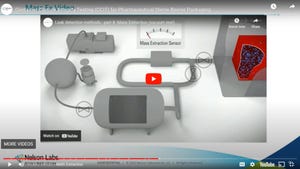
Other methods to confirm breach of sterile barrier are dye leak testing, gas leak testing, and bubble emission testing. See ASTM F2097, Standard Guide for Design and Evaluation of Primary Packaging for Medical Products, for other applicable test methods.

We use Tyvek pouches for our gamma-sterilized medical devices. I need to know the environmental conditions or parameters at which these sterilized products should be stored, such as in a warehouse, to prevent packaging deterioration.
The best course of action is to verify the appropriate storage conditions with your sterile packaging manufacturer. However, a good rule is to maintain storage between 60º to 80ºF, with ambient humidity of less than 50% RH. In general, a standard Tyvek-to-PET/PE pouch is stable over a range of storage conditions, as long as it is not exposed to extreme conditions for a long period of time. Tyvek and polyethylene can be subject to phenolic yellowing owing to prolonged exposure to UV light, or the exhaust from propane-driven fork trucks. Primary packaging should remain in its original containers until time of use.


Do any types of devices or implants require double-barrier packaging?

The use of a double-barrier system is influenced by the situation in which the product will be presented for use. Thus the decision to utilize a double-barrier system is highly dependent on input from other areas such as marketing and product development.

For example, there are double barriers that are required because the outside of the package needs to remain sterile because the whole package is introduced into the sterile field, not just the contents of the package. An example of this may be an absorbable-suture pouch that would be used in an operating room. The whole package may be required to be packaged in a second barrier, such as a Tyvek/film pouch, which would allow the outside of the inner pouch to be sterile as it is introduced into the sterile field.


No votes yet