Tech Corner: Handled with Care
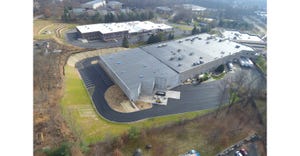
Last year, Baxter’s BioPharma Solutions business (www.baxterbiopharmasolutions.com) expanded its cytotoxic contract manufacturing capacity to increase support of early-phase oncology sterile drug formulation through commercial scale-up, introduction, and lifecycle management. In need of a capacity extension, Baxter replaced a vial-filling machine with a highly automated filling line including a closed Restricted Access Barrier System (cRABS) dedicated for aseptic manufacturing of cytotoxics at its manufacturing facility in Halle (Westfalen), Germany. One large-scale lyophilization unit was also added to increase freeze-drying capacity.
Baxter had been using barrier technology for more than 15 years for its manufacturing operations at the Halle facility and the new filling equipment included the latest cRABS technology. For manufacturing high-potency compounds, these containments are considered state of the art.
The decision to go with the cRABS technology was driven by two reasons: First, cRABS provides the best available operator and product protection due to full separation of process and people; and secondly, it enables the user to design very efficient processes for changeover, set up, and cleaning. In this particular case, the integration of the cRABS technology into the existing infrastructure eliminates the need for significant changes to the buildings and cleanrooms that would have been required to support a barrier isolator technology.
According to Baxter, cRABS technology offers additional features and benefits including:
• Strict separation of product and personnel.
• Minimized contaminated area during processing.
• Class 100 with background class 10,000 to meet GMP requirements.
• Material transfer systems to protect the environment.
• Overpressure in Grade A to surrounding room Grade B to protect the product.
• Safety-locked doors and gloves to protect the operator and limit access to aseptic process.
• Full containment allows effective cleaning and sanitization of machine surfaces in the Grade A environment.
Application of barrier technology in the area of aseptic manufacturing enhances product sterility and reduces contamination risk, reports Frank Generotzky, director, technology & engineering, Baxter Oncology GmbH. “The machinery has to protect operators, products, and the environment,” he explains. “Based on qualification studies we proofed, the cRABS design we use is able to process cytotoxic material with an OEL value (Occupational Exposure Limit) of < 1 μg/m³.”
With no standard technology available for sterile manufacturing of cytotoxics drugs, and only a small number of machine suppliers able to build such machines, designing, installing and validating this type of cRABS appropriately was a definite challenge, explains Generotzky.
“With more than 50 years’ experience in sterile manufacturing of cytotoxic drugs, we understand our processes well and have identified our process risks and where the critical control points in the machinery would be. However, we required a machine supplier who really understood our needs and was able to adapt standard machine design to our special process requirements. To ensure a deep process understanding, a training program for the filling machine and the cRABS design engineer was conducted at the Baxter facility at the project kickoff.”
Perhaps the biggest challenge was that because the new line would replace the existing one, there would be no second line to back up the first in the event of a complication. “Everything had to go as planned, to ensure the client needs could continue to be fulfilled reliably,” says Generotzky.
Baxter considered vendors with a strong background in aseptic filling, ultimately selecting Optima Group Pharma’s (OGP) Inova division. “We could have brought in multiple companies and consultants, but we would have lost time managing all three parties (including Baxter),” says Generotzky. Inova’s “all-in-one solution” impressed Baxter, whose team felt that “they could focus on the process together and not lose capacity through supplier interface and coordination.”
Baxter provided a detailed document outlining its process, and intensive design reviews were conducted throughout different project stages. Inova built a wooden prototype of the vial-filling line in a separate building to simulate all steps of Baxter’s process to assist with operator training.

Baxter required the following in order to achieve a high safety level for product and personnel:
• Single-wall concept featuring external return air ducts for maximum operator accessibility.
• Return air ducts along the entire length on both sides of the filling machine supporting homogeneous air velocity distribution.
• Pressure-controlled active mouse holes preventing active air exchange between inside and outside of the cRABS.
• Pressure zone concept able to maintain positive pressure in the critical zones to the Grade B room while the different zones are separated from each other by active mouse holes (pressure sink concept).
• The design needed to support wash in place processes and ensure a defined and reproducible decontamination of the machines.
To ensure that the project met an aggressive timeline, the teams held daily conference calls to ensure progress, explains Generotzky. “We had a very clear picture of the progress and could identify any potential issues immediately in order to be able to plan counter actions. We needed to plan everything before it happened, even counteractions, in order to save time.”

“The major difference between this project and others is that everything was driven by the process,” explains Juergen Rothbauer, Optima Pharma. “Never before did we have a project in which our customer allowed us to participate as much.”

Some of the complexities that needed careful planning included separating the operator from the process and cleaning the system without opening it. Air flow around certain stations of the filler had to be well understood and simulated; not only did air quality and speed need to be maintained while moving through those stations, but air also had to be filtered and treated twice before being released from the system. Finally, ongoing in-process control had to be maintained for continually monitoring vial fill weight and air quality.
Inova adapted its standard vial filler to Baxter’s process and built a cRABS around it, explains Rothbauer. Both teams worked very hard in advance to understand the needs of the process before building machinery. Every deviation from the mock up resulted in a new risk analysis, explains Generotzky.
“You have to do a mock up before because we have to understand every part of the handling,” adds Rothbauer. “The more details from the customer, the better, because it is not enough to be able to build the machinery to customer specifications. We have to know every detail of that process, so we can adjust filling needle position, for instance, and measure accessibility of all points for operation, cleaning, and maintenance.”
Operators developed standard procedures using the mock-up prototype before the machine arrived, including changeover, start up, interventions during filling, sampling procedures, ending procedures, decontamination, cleaning, and disinfection. Simulating vial filling and interventions like in-process controls on the wooden mock-up model allowed the team to understand influences on air flow of the new system so they could properly place the ducts. “We verified everything on 3D-CAD simulations before we qualified placement; otherwise, we would have had to assemble and disassemble and requalify several times,” says Rothbauer.
Design drawings, from the final design of the filling-machine and cRABS in several operating conditions, were submitted to a consultant for air flow optimization. Numerical airflow simulations were carried out to understand and optimize the air flow within the cRABS before it was built. “With this study we could eliminate risks for the aseptic handling before the first plate of stainless steel has been cut,” he adds. “We wanted to avoid surprises in later stages. As a result, we did not have any change in the design during commissioning and validation until today. With the mock-up and the airflow simulations we identified several opportunities for improvements at an early stage of the project.”
Added Generotzky, “This helped to minimize the time for process development, qualification, and validation.”
This expansion, which took place throughout 2009, was successfully completed in 2010. This expansion will be followed by an additional phase of expansion to be completed by 2012. As a result of this expansion, Baxter received the “European Outsourcing Awards” in 2009 for the “Most Effective Scale-Up/Technical Transfer Project” for this project. According to Baxter, the project was recognized for averting installation delays and maintaining manufacturing timelines to meet all client obligations during the expansion period.
- Login or register to post comments
-
- Email this page
Printer-friendly version