Sorbent Use and Sustainability in Packaging
By Adrian T. Possumato, Global Director, Healthcare Packaging, Multisorb Technologies
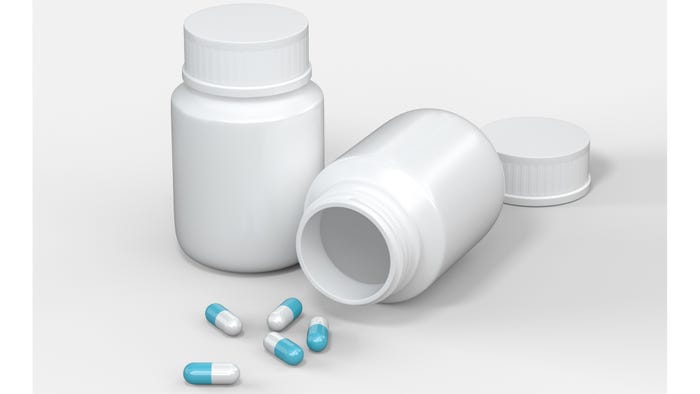
In the active packaging or sorbent industry, some manufacturers of desiccants, oxygen absorbers, and volatile organic compound (VOC) adsorbents are also offering products and services to the pharmaceutical and medical device industries to assist in reducing their customer’s corporate carbon footprint.
Extending healthcare product shelf life through active packaging solutions often results in improved production efficiency and production planning, efficient manufacturing site management and logistics, more effective use of retail space, and reduced product losses owing to chemical or physical instability.
Let’s consider some of the specific elements of sorbent-based solutions used for the chemical and physical stability of healthcare products and their role in addressing this global challenge.
Optimized Use of Sorbents
Leading suppliers of sorbents remain focused on the issues of sustainability and minimized impact on the environment with comprehensive programs involving the scientific selection of sorbents and their use in commercial packaging operations. This process starts with the optimized selection of the proper sorbent type and weight for a particular healthcare product or its packaging.
During this selection process, pseudo-empirical modeling programs are employed to calculate the optimal sorbent type, formulation, and weight for the stability requirements of the healthcare product in its packaging. This scientific approach assures the healthcare product manufacturer that excessive use of sorbents is not prescribed, hence reducing an unnecessarily large footprint on the environment throughout the supply chain. Additionally, pseudo-empirical modeling indicates that no sorbent is required in about 10% of customer’s packaging presentations.
Similarly, the solutions provided to commercial packaging operations combine the use of the optimized sorbent product solutions with related dispensing systems that protect the sorbent capacity during packaging operations. For example, some sorbent product/dispenser systems include dry air or inert gas purge to protect the sorbent’s capacity during packaging operations resulting in a greatly reduced scrap rate.
This combined calculations-through-operations effort allows for a minimalist, targeted approach to the selection and use of sorbents in healthcare product packaging.
Impact of Sorbent Chemistries on the Environment
Great care is taken in using sorbents and sorbent formulations that have a neutral impact on the environment upon disposal. For example, the desiccants commonly used in healthcare packaging are inert, offering no chemical reactivity with their surroundings.
Upon disposal, they provide no greater impact on the environment than common garden soil or beach sand.
For those sorbent products that are chemically reactive, the focus is to utilize formulations that do not introduce harmful chemicals to the environment. Many oxygen absorbing products commonly used in pharmaceutical packaging are based on safe, non-toxic iron oxide-forming technology. Consequently, rust and inert desiccants are the only formulation materials introduced to the landfill when disposed.
Sorbent Devices and Reduced Plastics Use
Sorbent formulations need to be placed into devices for use. And while there are many sorbent devices offered by manufacturers, diligent efforts have been made to offer sorbents with a minimized environmental footprint through the reduced use of plastic packaging. One can categorize these sorbent devices as drop-in, fit-in, and built-in based on their application
in healthcare products or their packaging.
The drop-in approach offers moisture, oxygen, and/or VOC control in healthcare package headspace and consists of a traditional desiccant or oxygen absorbing packets or canisters. Some manufacturers have focused their product offering principally on the manufacture of packets from flexible, welded Tyvek (pure polyethylene fiber nonwovens). These packets use far less plastics than competing rigid plastic sorbent devices such as canisters.
Using little to no plastic are fit-in solutions that integrate compressed coated and uncoated sorbents, custom manufactured to specific shapes and sizes, to fit securely into the healthcare product or packaging.
The built-in concept incorporates the use of desiccant or oxygen-absorbing additives into the thermoplastic structural components of the healthcare product or packaging. These multifunctional sorbent additives can replace up to 50% of the plastic used in the healthcare product itself or related packaging.
Reducing and optimizing traditional sorbent device materials results in a smaller carbon footprint. It also improves recyclability by eliminating non-recyclable, multilayer packaging that often comprises EVOH, PVDC, and polyamide layers. This can result in moving from code 7 to recycling codes 1, 2, 4, or 5.
Elimination of Environmentally Unsound Materials
Active polyolefins and polyesters containing sorbent formulations could be used in blister packaging to replace chlorinated and fluorinated plastics, such as PVC, PVDC, PCTFE, etc. Manufacturing of chlorinated and fluorinated plastics has been thought to stress the environment through the use of harsh toxic chemicals. Their disposal in landfills could lead to dioxin formation. Incineration can be a challenge since all chlorine and fluorine compounds need to be removed from incineration gases. In addition, non-recyclable multilayer packaging materials such as metal foil-based and metalized plastics used in barrier packaging could also be replaced. Sorbents do not eliminate the need for barrier but work together to produce synergistic gains. These gains include reduced total packaging weight and materials usage, less expensive and more environmentally friendly plastics, 100% plastic structures in place of metallic foils, and monolayer packaging materials with active additives that are made to be recyclable versus multilayer packaging structures.


These polymer-based sorbents can also be used to replace glass containers, thereby reducing energy and transportation costs as well as damage during transport.
In an effort to provide for greater sustainability and a related reduced impact on the environment, leading sorbent suppliers remain committed to taking a minimalist approach in their use of plastics in their active packaging technologies. Additionally, the sorbent industry remains focused on the use of environmentally friendly sorbent formulations using materials that offer a neutral impact on ecosystems.
Multisorb Technologies (www.multisorb.com) has been an innovator in active packaging technology for 50 years. Founded in 1961 by John S. Cullen to protect products against the damaging effects of moisture, today Multisorb is a world leader in the development and manufacturing of active packaging components and solutions.
- Login or register to post comments
-
- Email this page
Printer-friendly version