Safety under Wraps

Government agencies are working together to ensure large safe and effective stockpiles of medical materials for emergencies, such as the recent H1N1 flu outbreak.

The Department of Defense’s Shelf Life Extension Program (SLEP), a fee-for-service program, extends expiration dates of stockpiled products through an interagency agreement with FDA. After products approaching expiration at stockpiled facilities are identified for potential testing by FDA, relabeling tasks then must follow specific guidelines from the defense department without the involvement of original manufacturers.

“The Defense Medical Standardization Board (DMSB) acts as an interface between the various participants and FDA,” says Crystal Rice, Trade Media, Center for Drug Evaluation and Research, FDA. “The DMSB handles all administrative functions, sends printouts to FDA regarding products eligible for shelf-life testing, computes financial benefits and cost, orders labels for relabeling, and bills all
participants.”

Program participants include FDA, the DMSB, the U.S. Army, the U.S. Navy, the U.S. Air Force, the U.S. Marine Corps, Defense Supply Center-Philadelphia, the Department of Homeland Security’s Strategic National Stockpile (SNS), the Veterans Administration, and the U.S. Postal Service. FDA grants extensions to a specific lot number with an understanding that all lots at all locations have been stored under Current Good Manufacturing Practices regulations. Laboratory analyses for SLEP are handled in the ORA Labs (Detroit, MI); Philadelphia, PA; and San Juan, Puerto Rico.

Since 1986, FDA has tested products for chemical defense including Atropine, Pralidoxime, and Pyridostigmine; antivirals like Roche’s Tamiflu; antibiotics like Ciprofloxacin and Doxycycline; antidotes like sodium nitrite and sodium thiosulfate used in Cyanide poisoning; the antiseizure medication Diazepam; and products for radiation exposure.
Analysis of analytical packages and shelf-life dating decisions rests with CDER’s Division of Research and Testing. Products that fail testing are destroyed and products that are not tested or do not receive additional extensions are destroyed after reaching their final expiration date.

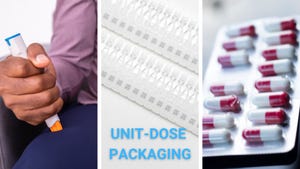
“I’m not sure how the government prefers to get capsules and tablets, whether they want them in big stock bottles or unit-dose packages,” says Peter Reichertz, partner, Sheppard Mullin Richter & Hampton LLP (Washington D.C.), and leader of the firm’s Food and Drug Law Group Reichertz says. “The pharmaceutical marketer really has nothing to do with it. They sell the product to the defense department and the defense department keeps it.”

Some healthcare law experts say products are most likely delivered to the government facilities in the same way they are made available to commercial customers. These specific details, however, are generally contract-specific.
“I can’t speak to [packaging] because you need to understand how the government has requested the product, their particular needs, and how they desire for it to be packaged,” says Rahsaan W. Thompson, counsel to Quarles & Brady’s Health Law practice, Quarles & Brady LLP (Chicago, IL). “It’s going to be labeled the same as it was for any commercial customer.”

Concerns about relabeled products getting into commercial supply have been raised. “It’s not inconceivable, but it shouldn’t happen if the government has control about it,” Reichertz says.

Although tracking technologies like radio-frequency identification (RFID) have been proposed by FDA,
these advancements are not legally mandated or used by pharmaceutical companies.

“No one’s using RFID right now,” Thompson says. “RFID is a great concept, but no one’s gotten on board with it yet because it’s not mandated.”

Products tested under SLEP are maintained under tightly managed, controlled conditions at limited locations. Dispensed products turned in after completion of an operation are destroyed. Similar practices are executed in routine peacetime care in Department of Defense facilities and civilian medical practice. This program saves taxpayer dollars and only applies to large stockpiles of medical material or medical material with limited commercial use. FDA will not normally test anything that has less then $10,000 of a lot on hand by SLEP participants and the program is not intended for small quantities stocked by local pharmacies, hospitals, or clinics.

In 2005, the value of material tested in SLEP exceeded $296 million and the cost for testing those items was about $1.5 million—a rate of return on investment of about 194-to-1. This means that for every dollar spent on SLEP testing the taxpayer has avoided the expenditure of $194 for new, replacement material.

No product is extended beyond 10 years from the original manufacturer’s expiration date. Some items have a shorter period that FDA will consider them for extension, such as silver sulfadiazine cream, which turns brown after five years of testing. FDA requires that there be at least $10,000 of a lot still on hand to test, otherwise it is not cost effective to test.

Once a lot is identified as a possible test candidate, it is marked in the system as “Lot Status: Add to Test.” At this time, FDA gets the list of all possible test candidates for the next 180 days and requests samples. Samples are requested through an automated system to the Customer, or Service POC. Service POCs notify one of their activities that they are to provide a certain amount of material, by lot and national stock numbers (NSN) to FDA and it is to be shipped to one of two FDA sites. Sometimes FDA will only request a copy of a product’s label — usually when the manufacturer produced several lots from one batch—normally a one-time request in the testing history of the lot.

FDA requires that products be labeled and relabeled in accordance with the Food, Drug, and Cosmetic Act of 1938 or the Food and Drug Modernization Act of 1997. Products not relabeled in accordance with these laws or FDA regulations are considered misbranded if they are sold, distributed, or dispensed and are in violation of these acts.
The CDER compliance office recommends for the defense department, that the extended product be relabeled with the lot number, new expiration date, and FDA project number.

New labels do not have to be the same font and color as the old label. The new label must be legible, but they must not obscure the writing on original labels. The sticker must adhere to the old label in a way that if peeled off what is underneath it would also peel off. Defense department guidelines state that it is not necessary nor advised to remove the original label on a product and put on a new label. FDA does not want the original product label removed. Putting on a new label on the product will require approval by FDA’s compliance office. The intent of this is to instill confidence in the ultimate user, that the products they are given or administered are of high quality, safe, and effective.

FDA has authorized a deferral of the requirement to have every individual unit of issue relabeled, but only while the material is maintained under centralized SLEP participants control. This was requested in order to reduce the cost for multiple relabeling efforts, as SLEP products may be extended multiple times before being issued to individual service members.

FDA will permit SLEP participants to label only the outer cartons of products with the updated information as long they remain in centralized storage, control, and management. This material must be relabeled completely, down to the individual units of issue, before being distributed to activities or individuals. Owing to the requirements for immediate readiness of all SNS drugs, they have opted to relabel all SLEP items immediately after FDA grants extensions.

The services’ medical logistics agencies procure and distribute labels to support the necessary relabeling of SLEP material. The DMSB is revising their mode of operations to consolidate this function to simplify the relabeling process and make SLEP more efficient. The decision to defer or complete relabeling of items will be made by each Service based on the urgency of need for each item and timeline for relabeling in a contingency situation.

According to Thompson, government agencies are transparent in indicating that SLEP exists, but do not want specific information out into public record.

“If the information gets into the wrong hands in terms of what’s on stockpile and what’s available then people can develop programs or activity to thwart what they’re trying to achieve,” Thompson says.

No votes yet