Reverse Logistics: The Future of Reusable Packaging
Reusing containers helps shippers go green.
Entropy Solutions Inc.
![]() |
|
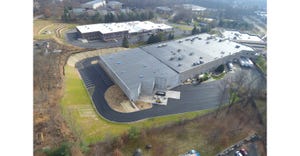
Upon arrival at a reclamation center, labels and tape are removed from Greenboxes with a nontoxic, environment-friendly cleaner.
|
With rapidly increasing interest in sustainable packaging materials, many companies are choosing to ship their temperature-sensitive products in reusable shipping containers rather than traditional cardboard boxes. The idea of a reusable shipper is exciting and proof that companies are “thinking green.” But how does it work in practice? How can a company be sure the medications they’ve just shipped cross-country don’t contaminate the box’s next payload? And how would that company know they’re truly getting their own boxes back—and not someone else’s?
William Cain, director of cold-chain logistics provider Warehouse Asset Management (WAM; Spring Branch, TX) had these questions and more when he bought his first order of Greenboxes from Minneapolis-based Entropy Solutions. Handling temperature-sensitive shipments of materials like medications and vaccines for life science companies himself, he saw the promise of reverse logistics, but knew there must be a strict system in place to ensure the boxes were being inspected and cleaned properly before being returned to their original owners.


Cain partnered with Entropy to spearhead their innovative reverse logistics model and establish their very first reclamation center.
Reverse Logistics
Reverse logistics—end-users sending a package back to the supplier once they’ve used it—isn’t a new idea. For example, many printer ink cartridge manufacturers ask consumers to send their empty cartridges back to be refilled or recycled. The procedure is new, however, to the temperature-sensitive shipping industry, and driven primarily due to the problem of packaging waste.
Currently, more than one-third of the Earth’s landfills are filled with packaging waste. Cardboard boxes and expanded polystyrene—traditionally used to ship temperature-sensitive payloads—are two of the biggest culprits. Europe (European Directive 94/62/EC) and Asia are leading the way in packaging-waste regulations, requiring entire countries to phase out disposable packaging material, but so far the United States lacks any similar directive.
Entropy Solutions’ reverse logistics model ensures a company’s purchased or leased Greenboxes are used again and again (a single box can be used 50 or more times), which significantly minimizes packaging waste and drives down shipping and logistics costs.
“Everyone benefits from the reverse logistics model,” Cain said. “When a box is used over and over, it represents a huge savings to customers.”
Reclamation Center
![]() |
|
Greenboxes are scanned and weighed for receipt and processing at the reclamation center.
|
WAM recently handled a shipment for a Houston-based life science company that loved the idea of reusable packaging, but was concerned it didn’t have the infrastructure to manage the reverse logistics and cleaning process necessary to operate such a process. The company was excited to learn about Entropy’s established reclamation center that could handle the entire process for them.
When a consumer or pharmacy receives its shipment via Greenbox, they simply affix the enclosed return mailing label and set it on their doorstep. A carrier, such as UPS, FedEx, or the United States Postal Service (USPS), collects and ships the box to the designated reclamation center where it’s readied for its next use.
Upon arrival at a reclamation center, the Greenbox is scanned and goes through a rigorous inspection and cleaning process in accordance with regulatory standards (21 CFR Part 211 subpart 94). A reclamation center employee carefully inspects each component of the Greenbox to ensure they’re all within strict quality standards. Should any component require replacement, it is removed and replaced, and the system is put back into circulation.
Next, the box is thoroughly cleaned, first removing all labels and mailing tape, and then applying an environmentally friendly cleaning solution to ensure the box is left with no trace of residue. The box is then sent through a UV tunnel where sanitation occurs. The UV level is based on FDA’s highest required dosage. Finally, it’s shipped back to its original owner in palletized unit loads, ready for reuse.
Each box contains a bar code and serial number unique to that specific box and customer. This information, along with Entropy’s proprietary tracking software, provides customers with the ability to track various pieces of data, such as shipping history, number of uses, cost per use, etc. Customers can also input as much identifiable information about a box as they wish, for example, what type of payload was shipped in that box.
By the numbers
“For the reclamation process to work, it has to be cost-effective,” said Cain. “Customers must know that even with the process built in, they’re getting a much better deal than they would with traditional cardboard, EPS, and gel packs.”
In 2007, WAM handled a shipping project for a company selling the influenza vaccine. The project required 115 boxes and totaled 1004 shipments when all was said and done (approximately nine shipments per box). WAM’s initial investment was around $11,000, but Cain estimates the company saved approximately $4000 over what it would have spent on traditional “one-and-done” cardboard shippers, in addition to the $50,000 saved in freight expense. The company also eliminated more than 3000 cu ft of landfill waste.
The future of reusable packaging
The cost savings are just the beginning of the reverse logistics model’s growing popularity among life sciences industry leaders. As companies look to “green” their practices overall, searching for a more sustainable way to pack and ship their most precious products just makes sense.
“Everyone is pushing for a greener world,” Cain said. “Greenbox proves you can provide better temperature protection in a more cost-effective manner, with less impact on the environment.”
Eric Lindquist is president of Entropy Solutions Inc. Visit the company online at www.greenboxsystems.com.