Packaging Flexibility in Texas

IPS solves Allergan’s eyedrop package issue.

Containers of eyedrops are packed into shipping boxes from a Schubert TLM machine, a partner of line-management company IPS International Packaging Systems GmbH.
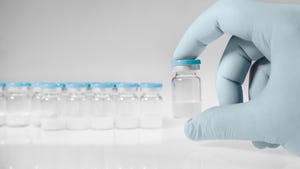
Allergan packs single-use eyedrop vials in either various-sized cartons or in hermetically sealed plastic trays at its Waco, TX, plant. Instead of using the typical two separate packaging systems for this, six months ago the company began to use a GMP-compliant packaging line that can do both.
 
The solution comes from IPS International Packaging Systems GmbH (Crailsheim, Germany). It offers components from 10 partner companies. For a trouble-free changeover between the different formats, a line management system was programmed to cover all machines, camera systems, scanners, and printers and centrally control them.
 
Allergan found a bottleneck with two aspects of the secondary packaging. Increasing demand meant the previously used and partly manual operation line would soon reach capacity. And switching between packaging formats in a short time was not possible inline.
 
The carton-packed eyedrops are over-the-counter products. To give consumers a range to choose from, seven carton sizes are available to hold between 20 and 100 portions, or measure between 65 × 60 × 20 mm and 155 × 100 × 75 mm.


 
The prescription-only product is offered in a pack size of 30. The light-sensitive eyedrops are packaged in hermetically sealed 130 × 95 × 37 mm plastic trays. There is also a version for all pack sizes, including the cartons, without a patient information leaflet.
 
Testing to GMP
 
The new packaging line is meant to process up to 500 products per minute, and ensure that it rejects products or packs that do not conform to quality assurance requirements. Allergan’s customer requirement specification included these inspection points: a legibly printed 2-D Data Matrix code on the vial; properly sealed plastic trays; correct label attachment to the lid of the tray; a character code printed twice on the label; and error-free affixation of the code, applied with a laser system, to the folding carton. Finally, the plastic tray and the carton must achieve the correct respective weight before leaving the line.
 
Because Allergan knew of IPS’s abilities from earlier projects, the general contractor was invited to draw up a line design. IPS started project planning in fall 2006. The line was validated by partner company ServoTech (Langenburg, Germany) and preinstalled at IPS’s site in Crailsheim. This way, it could optimize settings and interfaces in practice conditions, minimizing the installation and commissioning times at the customer’s location. A year and a month after the contract was awarded, the turnkey project was ready to go to Waco.
 
For Ron Lentsch, VP operations, Allergan USA, this kind of handling has an important advantage: “IPS works very effectively and our effort to manage this extremely extensive project can be reduced considerably,” Lentsch says.
 
2-D Data Matrix Codes
 
Operators feed vials on product carriers offline. Five plastic portioned packs of 4 ml create a vial card, are connected together, and can be torn off as needed. A Schubert TLM system removes the vial cards by means of a TLM F2 robot and lays them individually in four rows on a product conveyor. Four camera systems coupled with sensors check whether a legible 2-D Data Matrix code is located on every single vial. All units detected as faulty are rejected, as with all subsequent checks.
 
The primary packaged eyedrop vial cards reach a picker line consisting of three Schubert TLM F44 stations. Here, the corresponding number of preparations is sorted into plastic trays or cartons according to the preset format. The respective packaging material is picked on a conveyor running in the opposite direction. Prior to this, the precut carton blanks or plastic trays are removed automatically from a magazine. Each precut carton blank is assembled, bonded with hot glue, and then placed onto a sliding carriage or sled; the plastic trays can be used directly from a robot in the carrier.
 
Setting Course
 
The next steps differ depending upon the processing of the packaging material. A patient information leaflet is added to the folding cartons by an F2 robot in the next TLM system component and then closed. A laser system from Videojet in the discharge area of the machine adds a code to the cartons. These are then further conveyed by another TLM machine, which actually has a function only required for the plastic trays, up to a control station where a camera system from SV Research verifies the printed code. Every carton is additionally packaged in film on the subsequent shrink-wrapper with integrated heat tunnel from Beck Packautomaten. A control balance integrated into the conveyor checks for the correct weight.
 
Another TLM system machine attends to inserting the units into shelf-ready packaging. For this purpose, trays are assembled from precut corrugate blanks, glued, and filled with 24 to 40 packs, according to the format. The packaging line then conveys the carton to the automatic closure device and from there away from the line for further processing in logistics.
 
Double-Checked
 
For trays with prescription-only eyedrops, the station after filling is a tray-sealing machine (manufacturer: Inauen Maschinen AG). Here, containers are hermetically sealed with aluminum film. A camera system checks whether the sealing has been carried out properly in the discharge area. In the next two TLM components, through which the primary cartons pass, a patient information leaflet is first placed on top of the aluminum film and then a plastic cover is placed over it. Both components have fed automatically from a Schubert magazine.
 
A label is applied to the lid from a device integrated into this part of the line (Pago) and printed. One camera system checks the printing; in the discharge area, another checks the correct label fit and again verifies the label printing.
 
Sorting Signals
 
Subsequently, the closed trays and the folding cartons pass through the shrink-wrapper and the checkweigher. The next component can be used for both types of packaging: The containers are packed on the Schubert TLM machine into shipping boxes, which are assembled from precut and glued blanks and closed on the underside with adhesive tape. The topside of the shipping carton is also closed using adhesive tape in the final section of the line.
 
“The fact that the line offers the necessary flexibility to accommodate both types of packaging, different packaging sizes, and packaging schemes is attributable to the technology of the TLM system components,” explained IPS project manager Wolfgang Haas. This concept reduces the mechanical components needed, and the control software solves the respective assignment of the task at hand. Practically all objects that the vision recognition system identifies can be processed.
 
Synchronization was a particular challenge. From the start it was clear that Allergan was to receive a central Line Management System, and its complexity necessitated programming an individual solution. Components from 10 partner companies would be integrated, including the coordination of the signals from the control and regulation systems. In concrete numbers: 7 cameras, 12 scanners, and 1 checkweigher.
 
The solution allows for push-button format changeover for the control system. Variable data, applied by the printer, are then defined directly. Cameras automatically receive the same data verification information. Filling the magazines with different materials and retooling takes about 45 minutes.
 
“It was our intention to achieve a lead in the field of packaging technology with German cutting-edge technology. This was possible with IPS,” Lentsch says. “We have a high performance standard and lots of freedom in the future to introduce new packaging sizes and designs.”
Your rating: None Average: 4 (1 vote)