How Can They Help?

Contract packagers offer solutions for a tough climate.

Contract packagers are helping pharmaceutical customers weather the sluggish economy through closer collaboration on multiple fronts.
 
 
Outsourcing for packaging services, as well as for manufacturing, is growing. As pharma companies address increasing cost-control pressures and heighten competition, the recent economy has only added impetus to the industry’s focus on efficiency.
 
 
Curtailed spending by business and consumers hasn’t left life sciences industries untouched.
 
 
Patients have reportedly fallen off medication compliance as consumer spending has weakened. And healthcare services providers in some markets have reported falling patient volumes, attributed partly to a drop in elective procedures, according to the Federal Reserve Board’s Beige Book report in March.
 
 
But demand for drugs and health care services have held up, sparing drug and biotech industries from the worst effects of the recent downturn. The pharmaceutical and basic food production sectors were exceptions to “broad-based deterioration” in the economy for the reporting period of January and February, the Beige Book survey found.
 
 
“Manufacturing of biotechnology products and pharmaceuticals was one bright spot [in the manufacturing sector], with Boston reporting sales gains at a double-digit pace for biopharmaceutical firms; Richmond [VA] noting continued hiring of temporary staff among life sciences and pharmaceutical companies; and Chicago reporting continued strong demand for pharmaceuticals,” the Fed Board reported.
 
 
Contract drug packagers are driving efficiencies into manufacturing processes, while framing solutions for emerging marketplace requirements and trends. Continuous improvement practices result in lower costs for the customer. Packagers are taking on supply management functions, and expanding services in component sourcing and assembly.
 
 
An increasing focus on packaging costs by medical device manufacturers has prompted device contract packagers to deliver lower-cost packaging options, investigate lower-cost materials, and outsource for lower-cost components.
 
 
In light of the growing pressures on the life sciences to deliver product efficiently while conforming to regulatory requirements, Pharmaceutical & Medical Packaging News asked contract packagers this question:
 
 
“How are you helping pharmaceutical or medical device packaging professionals remain successful despite the weakening economy?”
 
 
Will Hamilton
 
 
General manager, contract packaging business, Alcan Global Pharmaceutical Packaging (Bethlehem, PA)
 
For a packaging professional to remain successful during a weak economy, it is imperative that packaging companies recognize that you cannot decouple growth initiatives from cost-effectiveness. This, of course, is perpetually true, but holds even more meaning in tough times. This balance between growth and efficiency, however, is easier claimed than practiced. For example, many packaging companies claim to be Six Sigma organizations by applying a subset of tools to drive out “low-hanging fruit” costs, pocketing most, if not all, of the rewards. This anecdotal approach is not sustainable and offers very little to the economy-challenged packaging professional.
 
 
Under the brand umbrella of VelocitySolutions, Alcan Packaging Contract Packaging imbeds a Lean Manufacturing Culture across the entire organization, ensuring such endeavors are indeed sustainable. We are hiring talent based on their experience at continuous improvement. We are engaging every employee—from the shop floor to leadership team members—in kaizen events to challenge conventional wisdom relative to labor, cycle time, and material usage. We are deploying routine metrics to demand that the most efficient, cost-effective packaging process is always top of mind. We ask customers to be participants in these exercises, to gain valuable insight but also buy-in.
 
 
All of this adds up to value for the packaging professional—in tough times, when revenue growth opportunities are hard to come by, it is imperative to work with a partner that exemplifies a “get-it-right-the-first-time” culture and delivers the best solution out of the gate, giving them the best chance to succeed.

 
Rick Seibert
 
 
Vice president of new business development, Sharp Corp. (Allentown, PA)
 
 
Sharp has established two key technology platforms that we can offer to our customers to help them avoid capital outlay while driving additional revenue during these tough economic times. We have seen an increased interest in compliance packaging and with our strong infrastructure of flexible equipment lines, we are perfectly positioned to run a wide range of packaging options for customers.
 
 
Our Design and Engineering departments work closely with the major package design companies to bring low-cost packaging to the customer. Many customers, brands as well as generics, are interested in compliance and adherence packaging alternatives. Greater compliance equates to higher product sales as well as contributes to brand loyalty and patient and practitioner education. In addition, with federal serialization and pedigree discussions ongoing, Sharp can offer a technology platform to allow our customer to develop the required track and trace and serialization programs without the need for large design and capital spending.

 
Edward “Tee” Noland
 
 
Director of business development, Pharma Tech Industries (Royston, GA)
 
 
As a low-cost provider, cost improvement is simply part of the culture at Pharma Tech Industries (PTI). We offer turnkey manufacturing, technology transfer services, and formal cost improvement programs.
 
 
Through our turnkey services, PTI can offer our customers simplification of their supply chain. In doing so, we manage each process in the supply chain through our manufacturing, packaging, molding, and testing expertise. That service helps cut out needless costs associated with transportation, middleman inefficiencies, and supply-chain oversight.
 
 
PTI also has a full-service engineering capability. We design unique solutions to improve our customers’ processes during the early stages of a technology transfer when cost improvement opportunities are the greatest. A technology transfer occurs when a production process is moved from one supplier to another; oftentimes, in the contract pharma business, we find that these processes come from internal client-owned operations that are either reconciled completely or downscaled.
 
 
Lastly, we maintain a formal Cost Improvement Program (CIP) with our strategic customers. We proactively recommend creative ways to cut manufacturing and packaging costs through packaging enhancements and process improvements. Since material and ingredient costs tend to make up the majority of our cost structure, we typically focus on substitutes for costly materials and ingredients. One example of a cost improvement we have brought to a client is the reformulation of one of its products during a recent technology transfer. During this process, we collaborated with our client and third parties to develop new formulations that provide optimal results for our client in terms of cost improvement, manufacturability, customer service enhancement, and efficacy.

 
Joe Lally
 
 
Marketing manager, packaging for pharmaceuticals, Howell Packaging (Elmira, NY)
 
 
One certainty about business cycles is that they will occur. The current economic climate is, to say the least, challenging. Speaking from the perspective of a company that has been in business for more than 125 years, however, it is not unfamiliar territory for Howell Packaging. As history has taught us, organizations that are consistent in their approach to the market and, above all, offer real value to their customers will not only survive, but will become stronger. Howell Packaging remains an independent and successful operation because we have a clear understanding of our strengths and remain focused in the areas in which we can make a positive contribution to our clients’ goals.
 
 
Over the years we have become a horizontally integrated provider of products and services to the pharmaceutical and medical device industries. Our configuration makes us an ideal outsourcing partner. This is particularly valuable, as our clients strive for leaner and more-efficient operations, concentrating on research, regulatory, and sales and marketing.
 
 
A specific example of providing real value in the current economic environment is evidenced by our relationship with one of our European clients. As with many mid-sized, foreign-based pharmaceutical companies, our client needs a domestic packaging provider with sufficient infrastructure and the ability to provide multiple links across the supply chain. We started out by manufacturing folding cartons and providing contract assembly of the product ampules, diluents, and associated literature into the final package. As the relationship developed, we continued to explore the other ways in which we could provide real value. The most obvious was to suggest that we take over the manufacture of the thermoform tray that was currently provided.
 
 
The next step was somewhat more ambitious. The product is manufactured in Europe and requires a two-step process with labeling of the ampules being the second step. We explored adding a labeling operation for ampules and vials to our secondary contract packaging facility and presented the concept of conducting the labeling at our facility. Within a short period of time, the line was sourced, delivered, validated, and up and running. We now coordinate supply chain; manufacture multiple package components; provide labeling; contract assembly services; and, most importantly, create real value.
 
 
Our most recent addition, a 50,000-sq-ft, state-of-the-art, pharmaceutical storage and distribution facility, will enable us to offer an even more complete span across the supply chain and value chain. Our approach is to build a resource that can be integrated into a client’s planning function by providing project management, designing efficient packaging, manufacturing package components, performing contract assembly, and providing storage and distribution services. This is a proven antidote to a challenging economic environment.

 
Bill Eveleth
 
 
Vice president, sales and marketing, TestPak (Whippany, NJ)
 
 
We have not had to make significant changes at TestPak to adapt to the economic climate. We have always been a very cost-conscious company, which has enabled us to successfully serve the generic segment as well as branded products. I believe we run one of the most efficient operations in the industry, and our new business pipeline has actually grown considerably against the economic trend, as manufacturers have compared the cost of packaging in-house versus outsourcing to TestPak.
 
 
In terms of efficiency, fast turnaround is a strength of ours that we track very closely. It’s very costly if you have to wait four to six weeks or more to get your product packaged. We have more than one customer that has been able to win more volume as a direct result of our continued reduction in cycle time for packaging.
 
 
A second way we are helping customers improve costs is by designing around the most suitable packaging solutions. For example, we offer several designs of compliance packs. One of our systems is very popular because it provides the lowest unit-cost currently available in the market. No single design, however, is the best choice for all applications. Other TestPak systems, owing to a bit more design flexibility, are better choices for larger tablets or more-frequent dosing regimens. For instance, we have developed 90-count designs that fit into a single unit versus two packages that would have been required with the more conventional system.

George W. Hanford
 
President, G.C. Hanford Co. (Syracuse, NY)
 
 
One way that the G.C. Hanford Co. has helped customers control costs is in labeling. When we realized that label inventory was becoming a large expense, we developed an in-house printing facility with our label supplier, HP Mile Inc. Previously, we had a large amount of obsolete labels because short runs required minimum order quantities. We decided it did not make business sense to be in the printing business. Now we have a captive supplier that can specialize only in the labels we need and develop a minimal cost environment.
 
 
HP Mile runs the label converting at one of our manufacturing locations. This arrangement allows us to change production schedules without concern for availability of labels. HP Mile prints the lot numbers and expiration dates on each label, using the latest video inspection equipment. This reduces our costs and allows for faster throughput on the filling lines. We have zero label inventory because labels are ordered to match a specific production lot and delivered to the filling lines on a just-in-time schedule. These savings are passed along to our customers.

 
Kirk Kaminsky
 
 
Senior vice president, McKesson U.S. pharmaceutical packaging, RxPak and Sky Pharmaceuticals (Memphis, TN)
 
Medication adherence continues to be one major problem facing the healthcare industry. As evidence, a recent Kaiser Family Foundation poll released in late February 2009 said nearly one in four Americans are not filling a prescription because of the economy, while 15% cut pills in half or skipped doses of medicine. With this trend adversely affecting the pace of prescription-drug spending, manufacturers and retailers are looking for ways to increase adherence of their consumers.
 
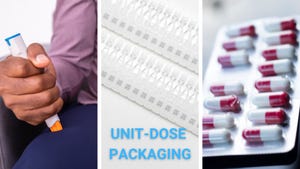
One potential solution to the dramatic increase in medication non-compliance is compliance packaging, including blister packaging. According to recent studies, unit-dose blister packaging and other innovative medication packaging can improve refill and adherence rates by 15–30%.
 
 
Aligning with this trend, McKesson RxPak recently signed a licensing deal with Burgopak, a UK-based packaging innovator, to be the first packaging company to provide new award-winning compliance packaging to pharmaceutical manufacturers and healthcare consumers in the United States. McKesson RxPak sees the packaging as a best-in-class innovation that can drive adherence and script volume through both sample and trade packages.
 
 
The Burgopak package allows manufacturers enhanced branding and patient program opportunities. For example, the integration of a McKesson LoyaltyScript card with a Burgopak lets pharmaceutical manufacturers subsidize an eligible patient’s copay or out-of-pocket cost. This relationship-marketing-based card program provides the patient with copay assistance and other supporting services to encourage compliance and long-term adherence to prescribed medications.
 
 
McKesson RxPak believes the Burgopak package will ultimately increase consumer loyalty and patient adherence for the manufacturers. McKesson RxPak is launching the first U.S. production of Burgopak’s compliance blister package, in child-resistant (CR) as well as non-CR versions, under a three-year license agreement to develop the pack for the U.S. and Canadian markets. McKesson RxPak is also purchasing a specialized state-of-the-art Burgopak production machine, to allow production in excess of 20 million units annually.

 
Scott Garverick
 
 
Vice president of sales, Carton Service–Packaging Insights (Norris, TN)
 
 
At Carton Service–Packaging Insights (CS-PI), we maintain a focus on helping our customers sell more of their products in their specific markets. We take a multipronged approach as we partner with our customers to help ensure their success.
 
 
First, we save customers a substantial cost at the package concept stage. CS-PI has two professional in-house design teams—one for technical and structural design of the packaging, the other for graphics design on the package once the structure is created. We provide the expertise of these two teams to customers at no additional cost.
 
 
We always talk to our customers’ production teams to gain specific insight into their throughput needs from a technical design standpoint. When our structural design team creates a solution, those throughput needs remain at the forefront, so we can offer the most efficient, cost-effective solution.
 
 
From the graphics design angle, our design team creates one-of-a-kind graphics presentations to ensure broad visual appeal with physicians and patients. Because it’s customized, it’s always a standout. The many thousands of dollars some pharma companies spend on packaging concept and creative design isn’t a cost factor at CS-PI.
 
 
Second, CS-PI has its own cartoning capabilities, providing customers with a cost advantage. The cartoning side of the business provides service to all industries, so we have the ability to take technical design knowledge that may have been used in another industry, and apply that expertise to create a better, more-efficient footprint for pharma-specific packaging needs. The result is a significantly reduced cost, as the customer need not research package development.
 
 
Third, we do everything under one roof, creating savings from the standpoint of responsiveness, production timelines, reduced start-up costs, and speed-to-market. In addition, we have the ability to support smaller clinical trial runs to large-volume automated production.

Peter Belden
 
Vice president, sales and marketing, Anderson Packaging (Rockford, IL)
 
 
We are seeing our pharmaceutical customers relying on us heavily for value-added services that were traditionally supported in-house. While working very lean, our customers do not want to sacrifice any of the attributes of competitive advantage. They want to remain innovative, adept at speeding products to market, flexible, and of course cost-efficient. Anderson plays a key role in partnering with our customers and providing a host of value-added services including project management, package development, equipment design and engineering, and graphics management, among others.
 
 
In project management, for example, the project manager essentially becomes an extension of our customer, providing real-time updates and managing all dynamic aspects of a product launch. Likewise, our package development staff utilizes its creative experience and extensive resources to offer package engineering, 3-D modeling, and rapid prototyping, providing efficient turnaround for representative mock printed packaging. Anderson also manages the development from concept to commercialization, including Consumer Product Safety Comission (CPSC) child-resistant (CR) and senior-friendly (SF) testing and rapid tooling development for commercialization.
 
 
Later this year we are launching our IntuiDose patented design. The customer came to us looking for an F=1 CR and SF package in a compliance-prompting format. They liked the IntuiDose design and we quickly developed custom designs and prototypes for their review. Utilizing printed and fully functional samples developed by Anderson’s in-house prototyping center, they completed market research to determine the optimal dosing regimen for the treatment, then sought commercialization as quickly as possible. We collaborated to finalize the design and initiate CPSC testing for CR and SF. Led by our experienced package development team, the product successfully completed CR and SF testing and the customer authorized commercial tooling to be fabricated. We are fabricating that tooling in-house, saving our customer valuable time and expediting the commercial launch. By developing and commercializing the package using our in-house team of experts and services, the customer gains considerable competitive advantage in cost and speed-to-market, as well as benefiting from Anderson’s extensive experience in successfully launching new programs.

 
Mike Anderson
 
 
Manager, packaging/consumer products, OraTech (Salt Lake City, UT)
 
 
OraTech’s business strategy is Smarter to Market. Our value-added approach is based on our turnkey, end-to-end services and the ability not only to develop but also to manufacture and fulfill medical projects to their precise specifications. OraTech’s vertical integration includes capabilities such as design engineering, production tool manufacturing, product manufacturing, filling (tube, syringe, blow-fill-seal), kitting, and packout and fulfillment within Class 10,000 environments.
 
 
OraTech recently collaborated with one customer whose needs included packaging, filling, kitting, and packout and fulfillment. On the packaging side, we created four injection molded devices and two thermoformed trays to hold the devices. We then filled the injection-molded devices using our powder filler. Once the devices were manufactured and filled, we kitted the components into the thermoformed trays and sealed the trays with Tyvek lidding. OraTech then prepared the finished products for sterilization. We have a sterilization vendor located within miles of our facility. The processes used in the example given could be put in place for multiple ventures including tube-filling, blow-fill-seal, or many other projects. OraTech also can supply any individual service we offer independent of combining services.
 
Our Smarter to Market methodology simplifies production, significantly reduces time to market, and reduces overhead costs, in turn improving customer profitability. In a weakened economy, it is even more critical to choose the right strategic manufacturing partner. Our engineering and manufacturing expertise, shorter lead times, and dedicated project management allows our customers the ability to do what they do best, which is to develop and market their products.

 
Kevin Flanagan
 
 
President, Compass Pharma Services (Clifton, NJ)
 
 
Today’s challenging economic environment is causing many pharma companies to rethink their primary business models and question basic assumptions about operations and growth. Added to this are admittedly thin new drug pipelines and a new political landscape in Washington, conditions which suggest a more challenging pharma profit environment in the decade ahead.
 
 
These unprecedented economic and political changes are forcing pharma companies to rethink or rediscover outsourcing. That’s necessary not just to cut costs but also as a powerful management strategy to preserve and extend capital, shorten manufacturing lead times, reduce operating expenses, and diversify the risks of owning and managing vertically integrated packaging operations.
 
 
Outsourcing packaging services is a proven and familiar cost-cutting tool. Some managers, however, look at outsourcing merely as a way of lowering per-unit packaging costs for a specific product, ignoring overhead and legacy costs when calculating potential savings.
 
 
In the coming years, we expect the pharmaceutical industry to respond to the current economic environment with much more financial soul searching to find permanent cost-reduction opportunities. And senior financial management will be increasingly unsympathetic to managers who seek cuts in incremental costs yet ignore opportunities to boldly slash legacy costs or avoid massive capital expenditures.
 
 
As a result, we believe the business case for outsourcing will be made not merely on unit-cost savings, but increasingly on a few strategic benefits.
 
 
Better Capital Allocation—In today’s economic environment, all companies need to be cautious about discretionary investments. An idea that can free up or delay capital investment should strongly be considered because it can offer savings that can exceed mere unit-cost savings.
 
 
On a small scale, outsourcing can help you avoid or delay the cost for a new packaging line or even a new packaging machine. On a larger scale, outsourcing can be the catalyst to rationalize or consolidate current facilities, especially for lines operating below full capacity or for outdated facilities that require an overhaul. Packaging operations typically involve twice as many personnel when compared with manufacturing, so outsourcing packaging has considerable appeal for labor-cost savings.
 
 
Right or wrong, Wall Street rewards pharma companies that invest capital on value-creation, not operational efficiency. R&D for core discovery, effective management of clinical trials, and powerhouse distribution are perceived by investors as being far more valuable than packaging and manufacturing operations. To illustrate, if you have the opportunity, ask your CEO this hypothetical question: “Would you rather spend $2 million to accelerate clinical trials for a promising new drug compound or to expand a packaging line?” Most CEOs focused on shareholder value would certainly vote for the future rather than the present.
 
 
Risk Reduction—The most potent arguments for outsourcing can be made not by pennies-per-unit cost savings, but by the millions or billions of dollars saved by avoiding mistakes or preventing failure. Contract packagers are experts at diminishing risks; we can help shorten time to market with turnkey CGMP capabilities. Our expertise can help avert mistakes, especially when you are moving beyond core competencies (such as launching a new type of product).
 
 
Then there’s the reduction of investment risk, especially when faced with packaging decisions for new products with unproven sales or for mature products with uncertain or declining demand. We can provide ready capacity if sales surge beyond forecasts, or we can help you avoid building a new packaging line if projected sales don’t materialize.
 
 
Outsourcing is one of the least expensive ways to buy time (and postpone capital expansion) until the market provides you with better data. This is especially important for so-called virtual pharma companies that compete on the basis of technical or marketing prowess. Operational readiness—being able to rent certified CGMP packaging capabilities—without the risk, delay, or burden of capital investment, is especially compelling to virtual pharma companies in times of credit tightness and investor demands for higher equity returns.
 
 
Better Quality—Contract packaging companies only succeed when they perform tasks faster, and with fewer resources, than their customers. As a result, a good contract packaging company must be expert in different packaging materials and systems. Customers can gain true competitive advantage from the unique and concentrated skill sets we possess. A contract packager can often find a better, faster, cheaper way to package products because our existence quite literally depends upon it.
 
 
Our management team purchased an existing contract packaging company in 2007 and created Compass Pharma Services. We’re rare among CGMP contract pharmaceutical packaging companies in that we’re owner-operated with a single layer of management between us and our customers.
 
 
Although the economic landscape has shifted since we bought the company, we think the argument for outsourcing is even more persuasive than ever. Accordingly, we’ve made several recent key investments to position ourselves for a very bright, long-term future.
 
 
• A focus on becoming more vertically integrated with value-added services for package design, package engineering, and process design. For example, we recently acquired a custom package engineering firm, MACTEC, to provide in-house custom package design and custom tooling capabilities.
 
 
• Creation of a new customer service organization with dedicated account reps with the information, expertise, and authority to resolve all customer issues.
 
 
• A revamped quality management system to employ the latest quality systems and methods.
 
 
• New production capabilities in response to customer requests. These include custom tooling for up to five different solid-dose forms in a single blister package, custom tooling and engineering for hospital unit-dose packaging equipment, and microfill capabilities for powders and liquids. We also offer ISO Class 8 cleanroom capabilities, and DEA Class III, IV, and V.
 
 
Historically, pharmaceutical companies have viewed outsourcing for short-term, tactical purposes. But with unprecedented shifts in the current financial and political landscapes, pharmaceutical companies can benefit from reconsidering all the strategic benefits that contract packaging provides, including improved quality, avoided costs, faster time to market, and better allocation of capital.

A. Jeffrey Wozniak
 
EVP sales and marketing, QPSI Companies (Moonachie, NJ)
 
 
QPSI is a success-driven national contract packaging company that provides complete supply-chain solutions from design through distribution. We have a major focus and strong capability on co-location and new site startups as well as international expansion as it relates to customer and, ultimately, consumer demand. QPSI provides additional value to our customers seeking co-located operations via our transition experience, self-sufficiency, informational technology advantages, and capacity economics.
 
 
QPSI utilizes two very important tools that are key to operating our business effectively and efficiently. The first is a Network Capacity Planning Tool that allows for us to look out 14 weeks among all of our sites (and in some cases, other supplier sites) and view planned capacity utilization. This provides visibility to potential capacity constraints by service and equipment type and allows for us to make necessary plans to accommodate a spike in demand such as scheduling, plant reallocation, and order validation. The other major tool we use is called a Readiness Snapshot that tracks all key items that are required to start a project on time. This data is recorded and tracked as metrics that feeds into our overall KPI tracking system. This enables us to identify weak links within the supply chain, which then can be corrected with assistance of the customer.
 
 
With these tools, QPSI has proven to improve overall supply chain efficiency which ultimately reduces cost and improves speed to market. Our customers are now realizing these benefits and want more.
No votes yet